How to keep Deer in Their Home Ranges Throughout Hunting Seasons – Part I

Not many days into a typical whitetail hunting season, most hunters begin wondering, where all the deer went. The answer depends on how you’ve been hunting. If you’ve been making drives or still-hunting (wandering aimlessly), most deer are then almost certain to be located where hunters aren’t making drives or still-hunting: in posted lands, for example, refuges or swamps and bogs, some of which may be as far away as 6–30 miles. If you’ve been stand hunting at one stand site where most hunters are stand hunting (during an archery season, for example), chances are most deer there are living quite normal lives out of sight 100 yards or more away.

Imagine hunting in an area where deer are merely living out of sight during an entire hunting season – like where my three sons, two grandsons, me and a number of weekend-only others hunt during a firearm season. We are stand hunters, of course, but not typical stand hunters. We rarely use a stand site longer than one-half to one day. The reason is, we hunt mature bucks only. Today, such deer are so skilled at finding, identifying and avoiding stand hunters in trees or on the ground that it is generally a waste of time to remain at one stand site longer than that.

Stand sites we use during the first 2–3 days of a hunting season are selected and prepared (if necessary) 2–3 weeks before the opener. During the rest of the hunting season, most are spur-of-the-moment, never-used-before selections near very fresh-deer signs. How, you might wonder, can so many hunters find and use so many stand sites, during the course of a hunting season without spooking and chasing all deer out of your hunting area?

The answer lies in another question: aside from “jumping” deer and alarming them enough to make them raise their tails and bound away, what makes whitetails abandon their ranges during a hunting season? The answer is, “overwhelming, much-feared trail and airborne scents emitted by hunters. Wherever a hunter travels on foot, a carpet of intense human odors that lasts four or more days is laid down and the hunter’s airborne odors sweep across the landscape throughout a triangular-shaped area 200 yards wide and 200 yards downwind. Airborne odors soon disappear after a hunter passes but continue unabated wherever a hunter halts to stand hunt.

Recent research by law enforcement officers in Minnesota have proven nothing a deer hunter can buy that is claimed to eliminate human odors can keep a K-9 dog from finding a human as quickly as a human not using these products. This means, of course, equally or more sensitive noses of whitetails cannot be fooled either (as I have been insisting since the 1970s). Sorry guys, this means today’s whitetail hunters must do something more than use certain soaps or soda, wear certain clothing or boots or spray themselves with certain potions to avoid being smelled and thus avoided by whitetails.

Blaze-Orange and Other Visual Handicaps

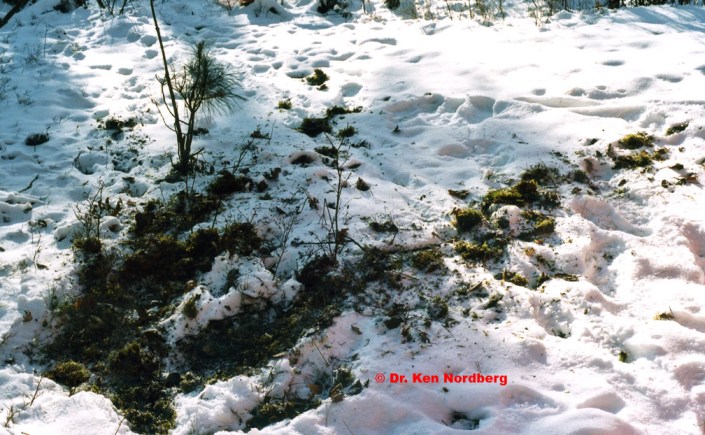
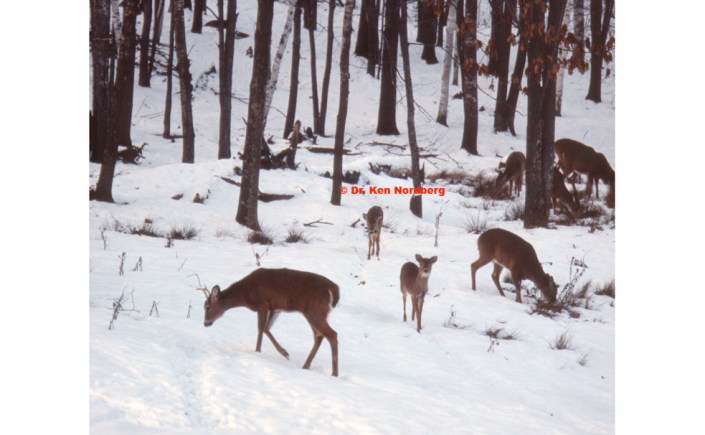
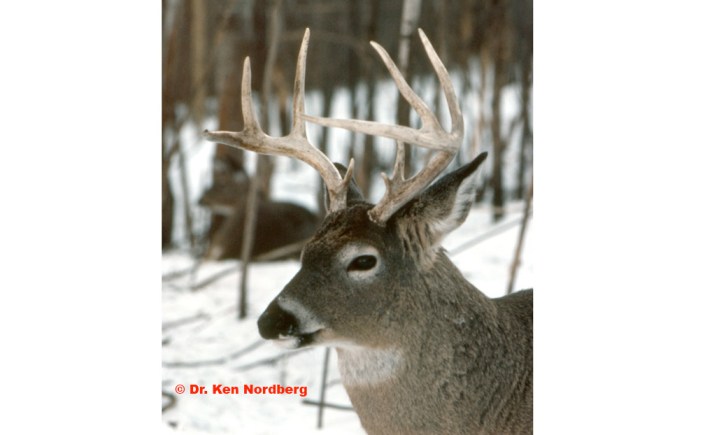
Blaze-orange hunting clothing is very easy for hunters to spot over great distances, providing well-proven safety for deer hunters while hunting within shooting range of other hunters. The trouble is, blaze-orange is also very easy for whitetails to spot. What they spot is different, however. Because whitetails lack receptors for colors in the red spectrum in their eyes, whitetails see reds in shades from black to white. Hunter red clothing of bygone hunting seasons appeared black to them (see photo on left above). Today’s blaze-orange clothing appears glowing white, most vivid when bathed in sunlight and moving (see center photo above). That’s not all. Regardless of what a tree stand hunter is wearing, natural camo when bowhunting or blaze-orange while firearm hunting, when seen against a bright sky in early morning or late evening when shadows are long or while shadowed beneath a mature tree at any time of the day, a hunter’s entire body will appear black against the sky or a snowy background, also especially visible while moving (see photo on right above). Today’s deer hunters therefore have three terrible visual handicaps to deal with: one caused by glowing blaze-orange, a second caused by eye-catching movements and a third caused by sky-lighting or snow-lighting. All three routinely ruin chances to take deer, most often without hunters realizing it.

There are effective ways to overcome these handicaps. One is, “mask or hide your body and movements while hunting.” This should be relatively easy for stand hunters, sitting or standing in one place amid natural cover for hours at a time as they do. Unfortunately, most are unaware of how easy they are for mature whitetails to discover and avoid and therefore find little reason to remain motionless long enough. When moving, few stand hunters move slowly enough to avoid being noticed by any of the 15–30 deer that live in the square-mile surrounding their stands. Few realize they should not move at all while one or both eyes of a nearby whitetail’s eyes are visible. Few select stand sites that provide adequate silhouette and motion hiding cover.

Today, ground level stand hunters generally use blinds to keep themselves and their movements hidden – blinds composed of natural, unaltered cover, blinds made from natural materials found lying on the ground and blinds made from man-made materials such as camo fabric with metal frameworks. I prefer using a fallen tree as a blind or natural unaltered cover deep and dense enough to mask or hide my entire body up to my neck while seated on my backpacked stool. I hide the light skin of my face and my head by wearing a camo headnet topped with my camo cap. I often add a fleecy evergreen bough to the top of my blind to further hide my head and head movements. I’ve taken several trophy bucks while seated behind a young evergreen with a horizontal space between boughs at eye level (quietly created with a knife when necessary) through which I could take aim without being noticed by those bucks.

My favorite tree to sit in while tree stand hunting is a mature red oak (which retains rust-colored leaves throughout winter) or a mature, well-branched evergreen closely surrounded by other mature trees that act as secondary blinds at stand level. Because height alone no longer hides hunters from mature whitetails, 9–10 feet above the ground is high enough for me. I make it a rule to a avoid altering surrounding cover as much as possible, using natural shooting windows through which to fire at deer rather than stand-to-ground shooting lanes which are instantly recognized as dangerous by today’s mature bucks. Admittedly, extra surrounding cover sometimes spoils opportunities to fire at nearby deer, but I’ve long been convinced such cover provides me with more opportunities to fire at mature bucks within easy shooting range.

Whether at ground level or in a tree, surrounding natural cover should be at least two-thirds effective at hiding your body and movements, if you are capable of remaining motionless for long periods and then when necessary, move very slowly. If you know you are going to move a lot, 80–100 percent hidden is recommended. It’s that important. The first time you begin easing up a rifle or bow up to fire at a big buck standing 10–50 yards away, you are going to wish your blind was 100% effective.

Here’s another bit of important advice, probably new to you: learn to fire your gun or bow while seated when stand hunting – you will be less noticeable and thus minimize noticeable movements at critical moments. Once learned, you will not only be more accurate when the chips are down, but your quarry will likely remain unaware you are near, therefore standing still or moving slowly when you take aim (an easy target).


Though Rare, My Most Productive Deer Sign for Taking Trophy Bucks

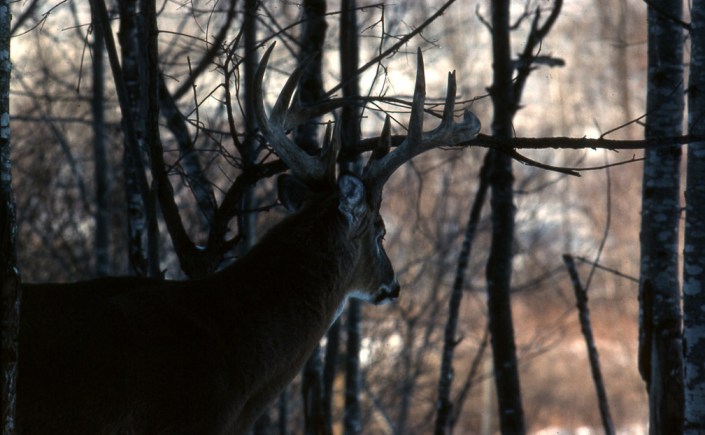
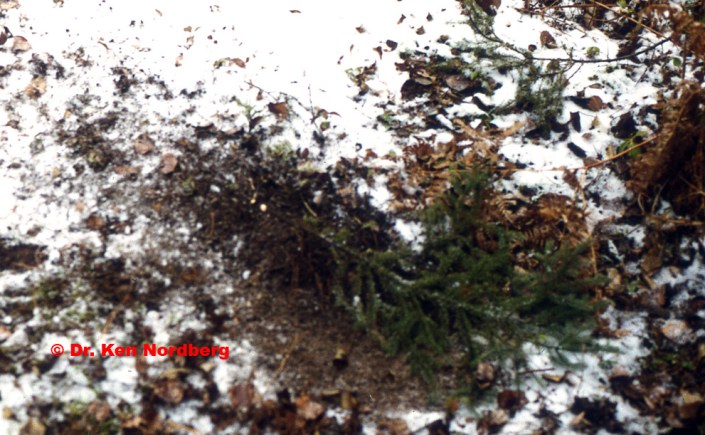
The first of the three two-week periods during which whitetails breed begins in early November, generally the 3rd where I hunt. About 85% of mature and yearling does are bred during this period. Ordinarily, few buck ground scrapes are renewed at this time – a sign indicating breeding is in progress. Occasionally, however, one is renewed. It’s almost rare. If a scrape appears to have been vigorously pawed by a buck minutes or an hour earlier, an overhanging branch or bough perhaps freshly ravaged by antlers as well, not only does this scrape have a very special meaning, but if properly hunted, the hunter is very likely to experience a very exciting opportunity to take a big dominant breeding buck within fifteen minutes to four hours.

The special meaning is: 1) a dominant breeding buck, one of the biggest bucks in your hunting area, is near, 2) it is accompanying a doe in heat, 3) the big buck is furious because another buck refuses to quit closely following the pair and 4) the scrape upon which it vented its rage happened to be handy.

If you were hiking to or from a stand site in a manner that does not alarm deer along the way, you may not have ruined your chance to take that big buck soon after discovering its scrape. Knowing this, whenever I come upon such a scrape (commonly spotted ahead in the beam of my flashlight before first light in the morning), I immediately halt (keeping well away from the scrape), back cautiously away (keeping my flashlight pointed straight down), heading off-trail downwind or crosswind until twenty or more yards away at a spot where I will be well hidden by natural cover (sometimes a mere six-foot evergreen tree). There I silently sit down on my stool, pull down my camo headnet and plan to sit very still up to four hours. Only once have I had to wait four hours. The bucks I envisioned I’d soon be seeing sometimes showed up within 15 minutes.

Why do bucks return soon to such scrapes? I believe they return to further renew the appearance and intensities of their musk odors characteristic of scrapes: musk washed to the scrape via urine passing through the tufts of fur covering their tarsal glands and musk originating from their scalps, rubbed on overhanging branches or boughs, thus intensifying the warning to stay away – scrapes are intended to provide such warnings to other antlered bucks. Patches of much-trampled turf or snow where two bucks battled are not uncommon near such scrapes in November.

Typically, bucks appear at such scrapes with no warning whatsoever. Suddenly, there a buck will be, applying scalp musk from a side of its head to a branch above it scrape or standing with all four hooves planted on the scrape, hind legs pressed tightly together, rump wagging from side to side and the buck urinating on the inner surfaces (tarsal glands) of its hind legs. When caught unprepared to fire, it’s always a nerve-racking challenge to raise a rifle or bow without being seen by the buck. The two times I was spotted while doing this, the buck disappeared within the blink of an eye during its first or second giant leap through boughs of evergreens 8–10  feet above the ground – a sight you never forget.

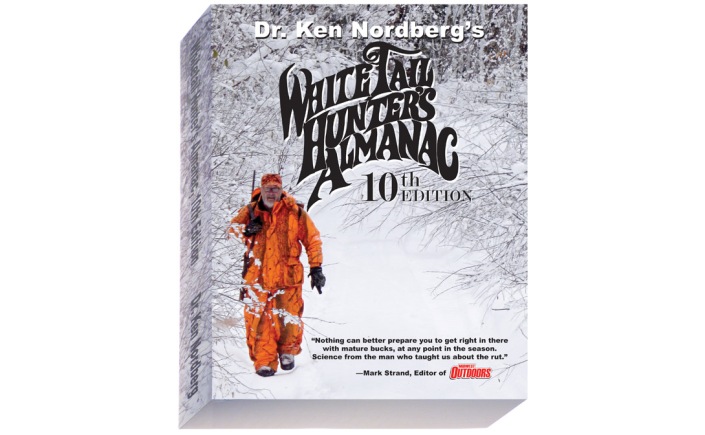
Note: by now you are beginning to realize the tips I have been providing in my blogs have unusually great hunting value. All are based on my more than a half-century of hunting-related research with wild whitetails over much of America and 74 years of deer hunting. Though I try, it is very difficult to provide comprehensive information about whitetails and whitetail hunting via blogs (or my YouTube presentations) alone. My current best source by far for such information is my just published (available in a few days) 518 page, 8″ x 10″ Whitetail Hunters Almanac, 10th Edition which has about 400 instructive photos and diagrams.  When you get a chance, check it out.

Another Deer Sign That Ensures Hunting Success if Properly Hunted

Buck ground scrapes can provide great buck hunting if hunted properly. The trouble is, a score of old and new myths have been misleading American whitetail hunters who key on scrapes for centuries. Does are in heat while bucks make and renew ground scrape is one. Ninety percent of scrapes are made and renewed during the 2–3 weeks before breeding begins. Bucks make scrapes to attract does in heat is another. Scrapes are actually no trespassing signs, made by bucks to mark intended breeding ranges and warn other bucks to keep out. Does urinate on scrapes to let bucks know they are in heat is another. That’s silly. Bucks can smell pheromone emitted by does in heat two miles away. Many products available today make it impossible for whitetails to smell hunters is a new myth. These are only a few. As a result, many hunters key on scrapes during periods bucks are least likely to visit scrapes and load scrape sites with long-lasting human trail scents and airborne human odors that accompany airborne buck lure scents. To top it off, many hunters also use calls that poorly imitate buck grunts and rattle antlers unnaturally, making it doubly easy for approaching bucks to identify and avoid hunters near scrapes well before they can be seen.

Some truths to keep in mind when hunting scrapes are as follows. In northern states, the annual frenzy of making scrapes typically begins about mid-October when temperatures begin dropping below freezing at night (archery hunting season). For the most part, it ends when breeding begins (firearm hunting season in Minnesota). Once their scrapes are initially made, bucks generally renew them (paw the dirt and add tarsal musk) once every 24-48 hours unless it is unseasonably warm, stormy or a hunter has been discovered nearby. By the final week of this period, dominant breeding bucks of each square mile (sometimes two) run off all lesser antlered bucks (lower in their local buck pecking orders), after which only scrapes of dominant breeding bucks are renewed. Bucks (except yearlings) forced off-range, generally take refuge in small (1–2 acre) areas until breeding ends, some making and regularly renewing scrapes in their hideaways.

While scouting for a scrape to hunt, never approach a scrape or the trail along which it is located nearer than 20 yards (deposit no lasting human trail scent there). Select a stand site 20 yards (more for gun hunters) away, downwind (preferred) or crosswind of the scrape. Never stand hunt upwind and never approach your stand from upwind. To ensure you will be able to hunt a scrape from downwind or crosswind, whatever the wind direction, select two or more scrapes to hunt that are 100 yards or more apart and different directions from your stand sites and approach trails.

Though upon reading this, many hunters will refuse to believe it, but your odds of seeing the buck that made the scrape will be much improved if you use no lure scent (buck lure scents can be effective if used in other ways in other areas). Use no call or rattling antlers. The buck’s own ground scrape and total silence should be your only lures.  Though it is now known products claimed to eliminate human odors cannot fool noses of K-9 dogs and whitetails, use them anyway to at least minimize your odors. Downwind bucks and other deer that smell you will then be far less apt to abandon their ranges.

If you hunt two days in a row, dark to dark, near a scrape that was previously renewed, but don’t see the buck, the buck knows you are there and is now avoiding that scrape or the scrape was made by a lesser buck that was run off by the dominant breeding buck or the buck only visits the scrape at night, meaning it’s time to move silently to a different scrape.

This is not the end of my scrape hunting tips. My next blog will cover certain scrapes during another period of time that are almost certain to provide you with an opportunity to take a big buck.

The current State of Chronic Wasting Disease in Minnesota and Wisconsin

Minnesota DNR deer biologists have begun a study to determine how deer disperse in Filmore County where white-tailed deer are infected with chronic wasting disease – a question that apparently needs to be answered in an effort to prevent the spread of this fatal disease of deer, moose and elk.

Chronic wasting disease in epidemic proportions is now found in deer in 24 Wisconsin counties.

A recent study has proven monkeys fed venison from deer infected with chronic wasting disease can also develop this disease, suggesting humans may also be vulnerable to the CWD virus. The virus found in the brain and spinal cord of an infected deer might accidently be transmitted to venison while a deer is being butchered. For these reasons, all deer taken by hunters in areas where deer are known to be infected with this disease should be tested for CWD before the venison is butchered and/or consumed.

A primary concern among biologists dealing with this disease is finding ways to keep whitetails from congregating, thus helping to prevent the spread of CWD.

All whitetails in Minnesota and Wisconsin congregate in traditional wintering areas (also known as deer yards) from late December until snow melts in spring. Many deer travel 30 miles or more to reach their wintering areas. Some wintering areas are inhabited by several hundred deer.

All easily recognized yearling bucks (all whitetail bucks have different identifying markings and antlers) permanently disappeared from my two Minnesota whitetail study areas (Aitkin County, 1970–1989 and St. Louis County, 1990–2017) following annual migrations of whitetails to wintering areas (commonly occurring a few days before Christmas). Yearlings live on their mother’s ranges throughout their yearling year, occasionally exploring off range. When nearly two years of age, yearlings bucks and does returning to their mothers ranges in early spring are forced off-range by their mothers, upon which they disperse in search of their first individual home ranges. Studies by deer biologists in another state revealed yearling bucks commonly traveled six or more miles before they settled in suitably sized areas not currently inhabited by older bucks or does likely to prevent settlement by younger deer.

Unless whitetails are fenced in, I cannot imagine how anything can be done to prevent the natural dispersal of two-year-old whitetails in spring or congregating of large numbers of all whitetails in traditional areas in winter.

Sooner or later, after everything else has been tried (the American way), I believe deer biologists and deer hunters will be forced to conclude the only practical way to eradicate CWD in our deer populations is to bite the bullet and take the same precautions that were successfully used to prevent the spread of incurable Mad Cow disease and Bird Flu.

Droppings That Ensure Buck Hunting Success

Under a variety of negative circumstances very fresh deer droppings 3/8 –1/2 inch long can provide excellent odds for taking mature bucks. The smaller of such droppings are made by yearling does and the larger droppings are made by mature does and yearling bucks (my hunting partners and I generally ignore yearling bucks). While vegetation is yet green & lush (early archery season), while leaves are falling heavily or during an unusually warm and snowless firearm hunting season, the deer signs my hunting partners normally key on – fresh tracks of mature walking bucks in or near feeding areas – can be difficult to spot and assess.

Keying instead on fresh (shiny) doe droppings, the most abundant deer signs in the woods under any of the above circumstances, has proven to be a productive alternative. The reason fresh doe droppings are productive is, mature bucks have an abiding interest in yearling and mature does before, during and after any of the three two-week periods they are normally in heat. Between the beginning of September until the end of the first week in January, whether does are in heat or not, mature bucks often visit them during hours whitetails normally feed – the reason feeding areas currently favored by does are the most likely of locations to spot mature bucks during any hunting season.

Does are most attractive to bucks, of course, while they are in heat, emitting airborne pheromone irresistible to bucks. This normally begins November 3–5, depending on which square-mile I am hunting in Minnesota, and ends about the 17th. Each doe is only in heat 24-26 hours and only about 10–12% are in heat on any one day during this two week period. There being no way to predict exactly when any doe will be in heat, the best my hunting partners can do (which is pretty good) is hunt doe feeding areas until we finally find one in which a mature buck (the biggest buck living in the surrounding square-mile) appears or is accompanying a doe. The odds of taking a mature buck are greater at larger feeding areas where more than one mature doe and its young of abutting home ranges currently feed, increasing the likelihood at least one will be currently in heat. My hunting partners and I almost always take 1–2 mature bucks at larger feeding areas shared by multiple does on opening morning. Doe feeding areas are made evident by lots of shiny droppings and tracks made by mature does, yearling does and fawns 2–3 weeks before a hunting season begins and/or on adjacent deer trails during a hunting season.

During firearm hunting seasons lacking snow in Minnesota (becoming more common), keying on shiny doe droppings in or adjacent to feeding areas has always paid off sooner or later, enabling my hunting partners and me to take our usual agreed-upon limit of four (sometimes five) mature bucks on public land per hunting season.

How to Hunt A Big Buck at a Feeding Area

Okay, you just found fresh tracks made by a big walking buck on a deer trail that leads toward a nearby whitetail feeding area. Walking means: 1) the buck wasn’t alarmed and 2) the odds that it will return to this feeding area during the next few days are therefore very good unless the buck 1) changes its diet (switches from graze to acorns or browse, for example), 2) a breeding phase of the rut begins or 3) someone (perhaps you) alarms the buck in or near the feeding area before you begin to hunt there.

If you alarmed that buck about the time you discovered those tracks while scouting two or more weeks before the opener, chances are that buck will be feeding there opening morning. If you alarmed that buck enough to make it bound about the time you discovered its tracks during the hunting season, it will probably be somewhere off-range for the rest of the hunting season. To avoid seriously alarming a nearby buck or other deer upon discovering its very fresh tracks – freshness revealing you are likely within its sight, hearing and/or smell – do not halt to assess those tracks. If you are seen or heard doing this, a whitetail will likely become convinced you have just selected it as a prey, after which it will soon abandon the area (fast or stealthily) and not return to it for four or more days. Instead, continue walking non-stop at a moderate pace, head pointed straight ahead, until out of sight and hearing and well downwind. Whitetails seeing, hearing or smelling you doing this will not become alarmed and abandon the area. Then decide what to do.

If you discovered those tracks early in the morning or late in the day, chances are that buck is feeding in that feeding area right now, in which case you should hunt there now.  Begin by waiting thirty minutes, giving any deer that heard you pass time to settle down and begin feeding again. Then head back, following a deer trail (for relative silence) from downwind or crosswind, walking softly non-stop (so you don’t sound like a stalking wolf or hunter) and keeping well hidden from deer in the feeding area by intervening cover or terrain. Do not approach within 10–20 yards of the edge of the feeding area where your movements are certain to be noticed by the motion-sensitive eyes of feeding whitetails. Then silently sit down on your backpacked stool where well hidden by natural, unaltered cover and where you have one or more natural shooting windows through cover to the feeding area. Plan to silently wait there without discernable motion (skillfully stand hunting) until 11 AM in the morning or darkness in the evening.

If you discovered those tracks midday or after sunset, either react as above or return later or early the next morning.

If you discover those tracks while scouting two or more weeks before the opener, head noisily toward the feeding area, thus letting the buck know you are coming, giving it adequate time to abandon the area without haste or great alarm so it won’t abandon its entire home range.  Then select and prepare (if necessary) at least two widely separated stand sites no closer than 10 yards from the edges of the feeding area where at least one stand can be approached from crosswind whatever the wind direction and without being easily seen or heard.

 Upon doing any of the above, your odds for taking that buck during one of the first three periods whitetails normally feed after you begin hunting there will be as good as they can be. After that, because you and I are not as skilled at getting to stand sites unidentified by nearby whitetails as we like to believe, all bets are off. Its then time to search for more very fresh tracks of a big buck to key on.

Deer Tracks Provide Other Valuable Information

As I stated in my previous blog, fresh tracks of walking deer in or adjacent to feeding areas can ensure hunting success if properly taken advantage of. Fresh tracks can also enable a hunter to key on specific classes (5) of whitetails, including mature bucks. The reason is, little deer have little hoofs, bigger deer have bigger hoofs and the biggest deer, mature bucks only, have the biggest hoofs.

Throughout my first decade of studying wild Minnesota whitetails (beginning in 1960), I measured countless tracks of various classes of Minnesota whitetails that were actually seen and identified, plus hoofs of deer taken by hunters. Eventually, my track research enabled me to very accurately identify five behavioral classes of whitetails by their hoof lengths all over America (deer classes and their hoof lengths are smaller in southern states). Today, I do not include indentations made by dewclaws when measuring hoof prints. The five classes of northern whitetails and their identifying hoof lengths are:

Fawns with live weights of less than 90 pounds have hoofs measuring 2 to 2-3/8 inches in length.

Yearling does, smaller than their mothers but larger than fawns, weighing about 120 pounds, have hoof prints measuring 2-5/8 inches in length.

Yearling bucks, spikes or fork-horns 1-1/2 years of age, and mature does 2-1/2 to 14-1/2 years of age are about the same size with a live weight of 140–150 pounds. Both have hoof prints measuring 3 to 3-1/8 inches in length.

Bucks 2-1/2 years-old, 6–8 pointers with an inside spread of 12–14 inches, weigh 170–195 pounds and have hoof prints that measure 3-3/8 inches in length.

Bucks 3-1/2 to 6-1/2 years old (though few are taken by hunters, few live longer), 8–12 pointers with inside spreads of 16–21 inches weigh 195–305 pounds and have hoofs measuring 3-5/8 to 4 inches in length.

What this means is, if you skillfully use hunting tactics designed to avoid alarming whitetails and key on very fresh identifying hoof prints made by any class of whitetail, your odds of taking that class of whitetail will be enormously improved. If you key on very recently made hoof prints 3-5/8 to 4 inches in length, your odds of taking the most wary and elusive of whitetails, namely mature bucks, will also be greatly improved.

This approach to whitetail hunting is most applicable when and where snow covers the ground during hunting seasons. Without snow (more common these days), my hunting partners and I commonly key on different deer signs (see my next blog).

Yes, There are Deer Signs That Ensure Hunting Success

Where do you like to stand hunt? Anywhere in the woods? Where you have a great field of view? Next to a deer trail? In the middle of a large patch of brush? At the edge of a cornfield? Where you got a picture of a big buck with your trail cam? Next to a corn feeder or food/bait plot? At sites where you and your hunting partners have been stand hunting for years? Sure, every now and then someone takes a deer at one of these sites. What about mature bucks? Hardly see any of those? That’s typical. Do you know about 40% of the 15–30 deer per square-mile in your hunting area are antlered?

“No way,” you say? This answer alone reveals you have much to learn.

Do you know there are deer signs than practically guarantee hunting success? If you knew what they look like, where to find them and how to take advantage of them, you can actually take a mature whitetail (not a mere fawn or yearling) or even a mature buck every hunting season.

One of the most productive of such deer signs are “fresh tracks of a walking deer in or next to a whitetail feeding area.” A walking deer is an unalarmed deer. If it remained unalarmed during the last period it fed there, it is almost certain to return to the same feeding area during the next period whitetails normally feed. If such tracks are discovered without nearby deer realizing it before 9–10 AM in the morning or after 3–4 PM in the afternoon, the deer that made them and probably others are in or very near that feeding area right now. If found after 9–10 AM or before 3–4 PM, that deer is currently bedded somewhere near or far from that feeding area. If not alarmed by a hunter meanwhile or if it has not yet discovered you waiting in ambush there, it is practically guaranteed that deer will return to that same feeding area during the next 1–3 successive periods whitetails normally feed, (the number depending on how skilled you are at stand hunting)—practically guaranteeing you will have an opportunity to take that deer (if you properly stand hunt there). If you key on such deer signs in or near one or more current favorite whitetail feeding areas every hunting season, you can actually be a regularly successful whitetail hunter, or if you prefer, a regularly successful buck hunter (accomplished by keying on fresh mature-buck-sized tracks and droppings).

Keep in mind, no matter how skilled you believe you are at approaching a stand site and stand hunting, following 1–3 successive visits to one or more stand sites adjacent to any whitetail feeding area (or any other site), few if any mature whitetails will thereafter be seen there, meaning the deer that fed there now know you are there and it’s time to move to another feeding area. Never begin a hunting season without being prepared to hunt two or more feeding areas.

This means, of course, you must be able to identify whitetail feeding areas while scouting preseason. Certain farm fields and forest clearcuts likely to be feeding areas are easy to identify. If other hunters plan to hunt them too, however, their periods of productiveness will likely be short-lived, lasting only an hour or two. To be produtive, a feeding area must contain lots of fresh and old deer tracks and droppings. Typically, there are 4–5 other whitetail feeding areas in a square mile of forested whitetail habitat that are not as easy to identify, some of which may not be visited by deer until after a hunting season begins. Learning how to identify and properly hunt feeding areas is crucial to becoming regularly successful at taking mature whitetails.


How to Become Regularly Successful at Taking Older Bucks

During my many years of presenting hunting seminars at Sports Shows and Sportsman Clubs across the eastern half of America, I was always amazed to discover great numbers of whitetail hunters, young and old, who were born with all the knowledge and skills needed to successfully hunt dozens of trophy bucks, therefore requiring no books or videos that explained on how to better hunt such deer. I wasn’t that fortunate. Starting from scratch as a farm kid at age 10, I had to somehow learn how to do it. During my first fifteen years of whitetail hunting, I had to settle for being taught by hunters with only one or two big bucks on their walls. Much of what they taught me either didn’t work or the deer I hunted didn’t do what they and magazine writers back then said whitetails do. Determined to finally learn the well-kept secrets of those who claimed to have dozens of ten-pointers or better on their walls, in 1970 I decided to try something desperate: study wild whitetails scientifically (part time at first and then almost full time). I then began to discover a world of whitetails little known by anyone. Soon my children and I began hanging mounts of ten- pointers or better on our walls. Between 1990 and 2017 my three sons and I took 98 mature bucks (8–13 pointers), all on public land inhabited by abundant grey wolves.

Such hunting success was made possible by our six new mature-buck-effective hunting methods, evolved first from the discovery of the inability of whitetails to discover me perched on primitive platforms only 6–9 feet above the ground, between 1962 and 1989, and second from discoveries made as a result of my hunting-related studies, between 1970 and 2017. These two overlapping periods now total 55 years.

My Whitetail Hunters Almanac, 10th Edition, took three years to write and edit because of the enormous amount of new field research completed since publishing my 9th Edition in 1997. This unusually large book (likely my last because I am now 83) was written to share with all deer hunters – beginners, veterans and advanced hunters – everything of greatest importance I have learned about whitetails and whitetail hunting since the 1960s. This includes deer signs that practically guarantee hunting success, habits, and range utilization of the five behavioral classes of whitetails, the many elements that affect the timing of whitetail activities, the four month and one week long whitetail rut with three two-week breeding periods, six new mature-buck-effective hunting methods and more. All play prominent roles in determining where, when, how and how long to hunt mature bucks or other mature whitetails at any site. Though the six new hunting methods introduced in this book were designed specifically for providing easy short-range shots at mature, unsuspecting (standing or slowly moving) bucks with gun or bow, they also provide regular opportunities to observe or take other deer. Used properly, these hunting methods keep you close to mature bucks and other deer every day or half-day you hunt. One or more of these new methods are certain to soon become your next favorites.

This book is available in two forms; an Amazon Kindle ebook and a paperback book. For a taste of its extraordinary whitetail hunting value, click now on the following: Dr. Ken Nordberg’s Whitetail Hunter’s Almanac, 10th Edition, ebook   Then click on “Look inside.” Information and forms for quickly and easily ordering a personally autographed, 518 page, 3–pound, 8″ x 10″ paperback version with 400 illusrations is now available in my website: http://www.drnordbergondeerhunting.com. Very soon after you begin turning the pages of your new Whitetail Hunters Almanac, 10th Edition, you are going to be astonished by all that is new about whitetails and whitetail hunting.