Doc’s New Whitetail Tracks Guidebook

Dr. Ken Nordberg’s NEW 2016 Pocket Guidebook to WHITETAIL TRACKS Fall & Winter is evolved from 45 years of dedicated, hunting-related research with wild deer and 70 years of very successful deer (buck) hunting. Every serious whitetail hunter should own this inexpensive ($4.99) book because it is extremely valuable, its 84 pages introducing the following extensive list of amazing innovations guaranteed to greatly improve success wherever whitetails are hunted.

  • Accurately identify all unseen whitetail deer in your hunting area via their track lengths (first introduced by Dr. Nordberg in the early 1980s in outdoor magazine articles and hunting seminars).
  • Key on one or more classes of whitetails — fawns, yearling does or bucks, does 2-1/2 years of age or older, bucks 2-1/2 years of age or trophy-class bucks 3-1/2 to 6-1/2 years of age.
  • Instantly recognize hunting values of whitetail tracks and track formations.
  • Recognize where, when and how to stand hunt next based on information provided by tracks throughout the 4 month period of rut-related activities beginning in September.
  • Take quick and skillful advantage of promising information provided by tracks.
  • Avoid wasting time where odds of hunting success are poor.
  • Keep whitetails from abandoning their ranges and/or becoming nocturnal during hunting seasons.
  • Become skilled at taking unsuspecting deer, standing or moving slowly, within easy shooting range.
  • Keep close to unsuspecting deer every day or half-day you hunt.

This ebook can now be downloaded in 2 versions. One is designed for Apple’s iBooks software. The second is designed for Amazon’s Kindle software.

Doc used Apple’s iBooks Author software to develop the iBooks version. This provides many advantages, for example, a better quality of typesetting. The Apple ibook version can be downloaded onto computers compatible with Apple’s iBook software. That includes PCs, Macs, iPads, and iPhones. Think of that! You can carry this version into the woods on your phone for quick and easy reference while scouting and hunting. The iBooks  ebook version can be found here.

The Amazon ebook version is now available. This version contains almost exactly the same text, graphics and photos as the iBooks version. However, because the typesetting for this version was much more difficult there are a few, very minor differences. This version can be read with any device compatible with the free Kindle app. That includes: PC, Macs, Kindles, iPads, and almost every type of smart phone.

We will continue to tweak both versions in order to make them better. Keep in mind, with both the iBooks version, and the Kindle version, when changes are made, people that purchase them now will be able to download the updated versions in the future.

Next, Doc has plans to publish a printed version of this GuideBook — a 4″ x 6″ pocket-sized paperback. Watch for announcements about when the printed version becomes available in Midwest Outdoors Magazine, on Twitter, on this blog and at Dr. Ken Nordberg’s encyclopedia-like website: www.drnordbergondeerhnting.com. Ordering information for all versions will be found on this website.

Also watch for announcements about when Dr. Nordberg’s long-awaited 10th Edition of Whitetail Hunters Almanac becomes available (text now completed), a huge 500-plus-page Apple ibook with more than 500 illustrative color photos and interactive videos evolved from Dr. Nordberg’s past 16 years of ongoing hunting-related research with wild deer from Minnesota and Wisconsin to Texas. Like all nine previous editions which many thousands of hunters have long considered to be “Deer Hunting Bibles,” this new book is also loaded with new hunting tips and an introduction to another new, well-tested hunting method, actually the best (most productive) method ever for taking otherwise seldom seen mature bucks and older does. An Amazon ibook and a paperback version are also planned for this book. Don’t miss buying the printed version when it becomes available, it likely to sell out fast. Like all other out-of-print Whitetail Hunters Almanacs today, its resale value will increase 25-fold or more.
Is There a Peak of the Rut? #Rut #Whitetails #DeerHunting

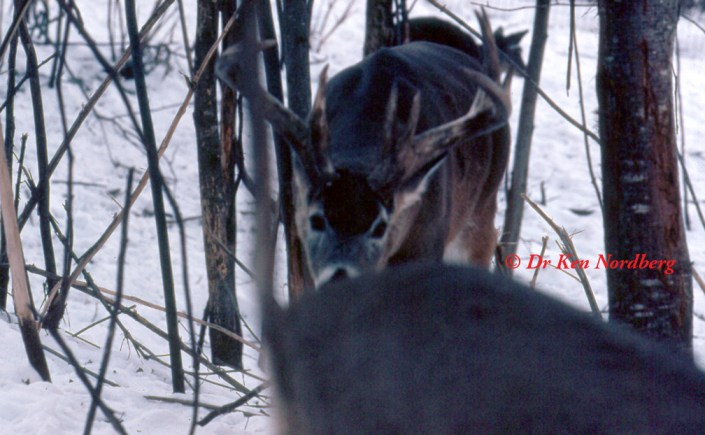
Lots of new or freshly renewed ground scrapes late in October do not signify a so-called “Peak of the Rut” is in progress. It only means cooler weather has finally caused highly aroused antlered bucks with new winter fur to begin a frenzy of marking individual breeding ranges. Does are not yet in heat at this time.

Each fall and early winter whitetails breed during three separate, two-week-long time periods. Estrus (heat) in does is triggered during these periods by a specific ratio of darkness to light (photoperiodism), occurring on the same exact dates in any one region annually. The first period generally occurs in November throughout the U.S. Some differences are seen in parts of Texas and Florida where this period occurs in October. The onset of each breeding period is progressively somewhat later from North to south in the U.S. In northern Minnesota where I hunt and study whitetails, breeding begins November 3rd annually.

At best, only about 10–12% of does are in heat on any one day throughout the two-week November breeding period, meaning, depending on deer densities only 1–2 of the usual 8-12 does capable of producing young per square-mile will be in heat on any one day (more in areas in which whitetails are over-populated or forced to congregate in remaining cover after deer-tall crops such as corn are harvested). Each doe will only be in heat 24-26 hours. During some days during this period, no does will be in heat within a specific square-mile. There should be little wonder, then, why it is so difficult to predict locations of mature breeding bucks while does are in heat.

Does not bred in November (about 15% for various reasons) will experience estrus again 28 days later and 28 days later again if still not bred, accounting for the second and third periods of annual breeding. In my Northern Minnesota study area, the second period of breeding begins December 1st. The third period begins December 28th, meaning, some breeding actually occurs well into January. My wife Jene and I have known and photographed several does that were always in heat on New Years Day.

The 85% of does bred during November give birth to 1–2 young in May. The 10% of does bred in December bear young in June. The remaining 5% bred in January and give birth to young in July (providing a means of determining which were bred during which time period).

“All of the above reveals there is no peak of the rut.” Just add the widespread notion there is one to the list of many strange beliefs American deer hunters continue to have about the whitetail rut (future blog posts).

Delisting of Grey Wolves in Minnesota

The following is a copy of a letter I received from Minnesota’s U.S, Senator, Amy Klobuchar in response to a request I sent to her, asking her not to oppose a bill that would delist Minnesota’s grey wolves from the Endangered Species list and explaining why. The amount of information a U. S. Senator must know to preform her duties is incredible, but as you can see from this letter, Senator Klobuchar is even well versed on this matter. It is good to know Minnesota’s enormous number of outdoor enthusiasts are well represented in Washington, D.C.

_______________________

April 11, 2016

Dear Dr. Nordberg:

Thank you for contacting me about Minnesota’s gray wolf population. I appreciate hearing your thoughts on this important issue.

As required by the Endangered Species Act, in 1978 the U.S. Fish and Wildlife Service established a population goal of 1,250 to 1,400 wolves for the state of Minnesota to ensure the population’s long-term survival. According to the Minnesota Department of Natural Resources, the most recent estimates of Minnesota’s wolf population indicate that there are approximately 2,423 wolves in the state.

This increase in the wolf population provides strong evidence that the Endangered Species Act has been successful and the gray wolf should be delisted. The Endangered Species Act is a tool that has helped bring numerous species back from the brink of extinction by protecting them until they can maintain a stable and viable population. While I support the Endangered Species Act, I do not believe its provisions and regulations are suited for the permanent protection of a recovering species.

That is why I sent a letter in 2010 to the U.S. Fish and Wildlife Service requesting a scientific review of Minnesota’s wolf population to determine if a new designation is needed, and if appropriate, to remove the wolf from the list of endangered species. On January 27, 2012, gray wolves in Minnesota, Wisconsin, and Michigan were removed from the list of endangered and threatened species and with the support of wildlife groups, the federal government transferred responsibility for wolf management to the states and tribes.

After the federal decision was made, a number of groups chose not to litigate this matter any further in court. But some groups did and as a result the U.S. District Court for the District of Columbia reversed the U.S. Fish and Wildlife Service’s 2012 delisting and limited the ability of the State of Minnesota to manage the wolf population. The litigation and the resulting decision have created uncertainty for many in our state and it has interrupted management of the species by state and federal wildlife agencies. I believe the decision should be reversed.

I have urged the Interior Department to take action to ensure that the State of Minnesota can continue to successfully manage its gray wolf population. I am confident that the Endangered Species Act has served its purpose in protecting the gray wolf and that the Minnesota Department of Natural Resources is capable of managing the population. That’s why on March 28, 2015 the National Wildlife Federation made official its support for delisting the gray wolf from the Endangered Species Act in Minnesota, Wisconsin, and Michigan with management authority returning to those states. As we continue to see the number of wolves we are seeing today, I will continue to advocate for delisting.

Again, thank you for taking the time to contact me. I continue to be humbled to be your Senator, and one of the most important parts of my job is listening to the people of Minnesota.  I am here in our nation’s capital to do the public’s business. I hope you will contact me again about matters of concern to you.

Sincerely,

Amy Klobuchar

United States Senator

Minnesota’s Iron Range Dilemma

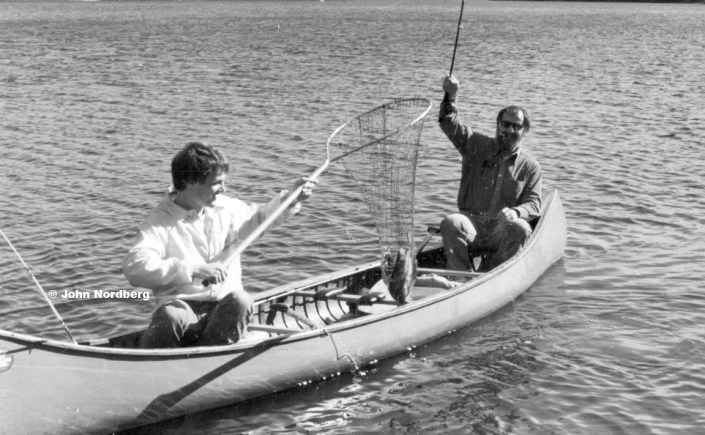
Doc and his John — on the Canadian side of the Boundary Waters Canoe area, Quetico Provincial Park — about 1 second before they flipped their canoe over!

Upon migrating to America in 1902, my Grandfather Nordberg began his life working in an iron mine near Pengilly, Minnesota. The young woman he married, also a recent migrant, worked in a restaurant there. Enterprising, he finally hired a crew of loggers and began cutting much needed timbers for underground iron mines. Decades later, one of my Nordberg cousins drove a Uke (Euclid) in an iron mine. Iron mining is therefore in my family’s blood and I am proud of it.

It is therefore not my intention to do anything that might make the lives of those who live in our Iron Range more difficult than it already is. If I can, I only want to help protect them from what is certain to happen if sulfide (copper) mining gains a foothold in northeastern Minnesota. PolyMet says copper mining will be bigger in Minnesota than iron mining and I personally can envision it happening, having often seen its widespread devastation in New Mexico and Arizona. A large part of Minnesota’s scenic Arrowhead Region can indeed be turned into a rocky moonscape by copper mining where nothing can live thereafter for thousands of years. In the long run it would probably cost Minnesota cost taxpayers much more than can be gained from copper and nickel to keep sulfuric acid and other poisonous substances from spreading via water and air to nearby towns, farms and forests including the Boundary Waters Canoe Area and Ontario’s Quetico Provincial Park. The proof that this can happen is enormously documented on the internet. Just type in “Copper Mining in North America” and see what you find. If you do not have a computer, call Friends of the Boundary Wilderness (612-332-9630) or write to Friends of the Boundary Wilderness, 401 N 3rd St., Suite 290, Minneapolis, MN 55401-1475 and ask for a copy of “A Mining Truth Report.”

Today, Minnesota’s iron rangers are in a terrible economic bind not of their own making. Ironically, Minnesota’s current unemployment rate is 3.7, one of the lowest in America. Rather than allow dangerous and destructive copper mining to begin in Minnesota, I wish our state legislature would create and pass a bill that would enable laid-off iron miners to learn a new trade and resettle in economically healthy areas throughout our state wherever needed. Surely this would be a safer and least expensive way to solve “Minnesota’s Iron Range Dilemma.”

Other Sources of Dangerous Pollutants Associated with Copper Mining

Caption for Photo—These Arrowhead Region fish already contain toxic levels of mercury. (Doc’s grandson Tyler with a large northern St Louis county walleye.)

Sulfuric acid and other potentially dangerous pollutants such as mercury, copper, lead arsenic, cadmium, selenium and nickel (which are toxic to fish, wildlife and humans) not only drain from from mountains of sulfide tailings (unused low grade ore) surrounding all copper mines, but drain from open pit walls, sulfide laden dust along routes used to transport ore to a processing facilities and from liquid processing wastes disposed of in tailings basins. No U.S, or Canadian copper mine operation has ever succeeded in keeping these contaminants contained as long as these dangerous pollutants exist. The Environmental Impact Statement (EIS) for the PolyMet mine predicts its west pit will fill with water and overflow into the Partridge River about 45 years after the mine’s closure (adding up to 65 years of accumulating sulfuric acid and other pollutants). The EIS also noted this discharge would exceed water quality standards for antimony and possibly nickel, sulfate, cobalt, copper and mercury for 550 to 2000 years.

Sulfates have been shown to turn non-toxic forms of mercury into airborne methyl mercury which is likely to be dispersed great distances by water and winds (likely to include the BWCA and Quetico Provincial Park in Ontario). Walleyes and other fish in some lakes in the Arrowhead Region already have enough mercury in them (likely originating from coal-burning power plants and paper mills far upwind) to make it necessary for our DNR to post warnings at boat launches, directing anglers to limit numbers of fish consumed over specific periods of time, least amounts or none recommended for children and pregnant or nursing women. The EIS for the PolyMet mine acknowledges “Relatively high sulfate concentrations would be released to wetlands north of the tailings basin and lakes downstream on the Embarrass River (which flows into the St Louis River and thence into Lake Superior at Duluth) that represent high risk situations for mercury methylation.” There is some uncertainty whether the west pit overflow will meet the Lake Superior Mercury Standard.

As stated in the “A Mining Truth Report” recently prepared by the conservation group, Friends of the Boundary Waters Wilderness, reveals, “Sulfide (copper) mining pollution can continue for hundreds of thousand years, even indefinitely. The generation of acid drainage will continue as long as sulfides, water and air mix. No new technologies have emerged can stop the chemical action once it begins. Some hardrock mines in western states need expensive water treatment into perpetuity.”

Acid from Copper Mine Tailings

Considering the known risks and dangers associated with every copper mine past and present in the U.S. and Canada, it seems strange we Minnesotans have not been hearing much if anything about them. Meanwhile, Canada’s new PolyMet Mining Company (which has never mined copper before) is quietly forging ahead to obtain rights to mine copper between Hoyt Lakes and Babbitt near the eastern end of the Iron Range in St. Louis County. PolyMet’s Environmental Impact Statement has already been approved by our MDNR but it still must be approved by the U.S. Army Corps of Engineers, the U.S. Forestry Service, the U.S. Environmental Protection Agency and several tribal governments.

What is risky and dangerous about copper mining? Unlike iron, copper and many other metals including nickel is found in sulfide bearing rock. When sulfide bearing rock is dug up and exposed to water (rain or snow) and oxygen, the sulfide turns into sulfuric acid (the same caustic acid used in car batteries).

There are several sources of sulfuric acid in copper mining. One is tailings. Copper mine tailings are piles of sulfide bearing rocks not containing enough copper to make it feasible to extract copper from them. Adjacent to PolyMet’s three planned open pits (in an area 500 football fields in size) will be piles of tailings 20 stories high. Once rain water and oxygen begin percolating down into these piles, nothing can stop sulfuric acid from forming. Though PolyMet plans to place waterproof liners in basins under these piles, the company admits these liners will eventually deteriorate and crack. Sulfuric acid will then pollute surface and ground water and aid in destroying about 1600 acres of surrounding wetlands — the largest permitted destruction of wetlands in Minnesota history. PolyMet also predicts sulfuric acid will eventually overflow from one basin into the adjacent Partridge River (killing everything living in the water). This river flows past the town of Hoyt Lakes into adjacent Colby lake and then into the St.Louis River which finally empties into Lake Superior at Duluth. At every other copper mine in operation in America and Canada today, great volumes of sulfuric acid and other dangerous pollutants have been accidently(?) released into water courses from time to time, ruining 1,118 miles of streams in Montana alone. Numerous containments at the mine site are expected to exceed water quality standards for hundreds to several thousands of years.

This is only the beginning. Watch for more about the dangers of copper mining in my future blog posts

Should Copper Mining be Allowed in Northeastern Minnesota?

With steel prices down and hundreds of miners being laid off across Minnesota’s Iron Range, it is only natural that open pit copper mining currently being promoted by the PolyMet Mining Company appears to be just what is needed to restore the economy in this beleaguered region of our state. But is it worth the risk?

“What risk?” you ask. “Hasn’t our Department of Natural Resources already approved PolyMet’s Environmental Protection Plan? Hasn’t PolyMet (a company that has never mined copper before) assured us environmental catastrophies characteristic of all other copper mines throughout the U.S. and Canada cannot happen here — a short distance west of our Boundary Waters Canoe Area and Ontario’s adjoining Quetico Provincial Park?”

The trouble is, when it comes to copper mining, we Minnesotans are babes in the woods. We know nothing about it. It is no coincidence PolyMet began promoting copper mining here while laid-off iron miners were begging for jobs and an extension of unemployment compensation. At other times, copper mining might have been a tough sell here.

For eighteen years, my wife Jene and I spent three months each winter in southern New Mexico and Arizona where open pit copper mining is huge in comparison to open pit iron mining in Minnesota. Everywhere we went, Silver City and Tuscon, for example, scores of people were angry and attempting to bring a halt to something copper mines were doing, planning to do or not doing. In these two cities hardly a day went by without being asked to sign a petition by persons seeking to prevent an entire scenic mountain from being reduced to poisonous rubble or trying to bring a halt to what waterborne or airborne chemicals from a nearby copper mine were doing to children and others. What copper mining is likely to do in Minnesota where fishing, hunting, camping and canoeing have long been cherished by millions of Americans for more than a century is trifling compared to what many humans now face near copper mines in other U.S, states and Canada today. Did you know that? Doesn’t that seem strange?

How about this question: with so many U.S. and Canadian copper mines now in operation, does the world really need Minnesota’s copper? Or does todays price of copper have something to do with it?

You don’t have to be a miner or earn a PhD in Hard Rock Mining to understand why copper mining is apt to be dangerous to humans, game, fish and forests or why such mines are likely to continue to be dangerous hundreds if not thousands of years after they are closed. Watch for my next copper mining blog post to learn why.

Wild Turkeys in Spring

Northern dominant tom turkeys are currently gathering harems of hens & southern dominant toms are already breeding. In either case dominant toms are keeping close to their hens, feathers puffed, tails fanned, making themselves appear twice as large as they normally are — occasionally taking challenging quick steps, wing tips dragging, toward intruding jakes or other adult toms. Toms with the most white on their heads seem to be most attractive to the hens. Dominant toms often pair up to keep other toms from stealing hens, one fighting to drive off any intruder while the other keeps hens from joining another tom. Wherever they go, a dominant hen does the leading and the dominant toms closely follow, never wandering off until breeding comes to an end.

Right now the big toms are quick to notice any hen lying on the ground, a possible invitation to breed. To encourage hens to accept breeding, dominant toms often dance, repeatedly hopping from one foot to the other. Dancing on a receptive hen’s back while it is lying on the ground is a prelude to actual breeding, hens seemingly demanding a good backrub before turning their tails to one side to accept semen from the tom.

Hens of the harem, up to thirty of them, constantly keep a sharp watch for danger, thus protecting toms with other things on their minds. Upon spotting something dangerous nearby, one sharp warning cluck from a hen will instantly trigger a storm of strong wing beats as all turkeys fly toward high perches in nearby trees.

For all the above reasons, white-headed dominant toms seldom fall victim to hunters. Most taken are lesser adult toms anxiously seeking wayward hens, therefore especially susceptible to skilled calling and the sight of one or more realistic hen decoys.

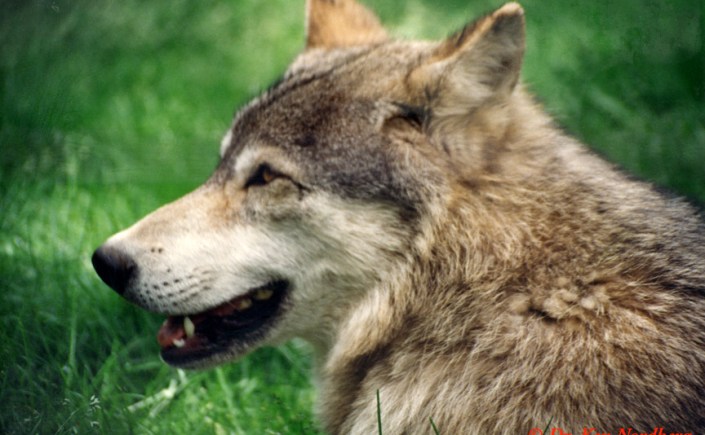
Letter to Minnesota Senators concerning the Wolf Bill

Dear Senator Klobuchar,

My name is Dr. Ken Nordberg. I am 81 years old and I’ve been a Minnesota deer hunter 71 of those years. After retiring from Dentistry in 1980, I became an outdoor writer. I am well known for my hunting-related studies of white-tailed deer (plus black bears and wolves) in Minnesota and elsewhere in the U.S. since 1970. My primary whitetail study area since 1990 is located in northern St. Louis County. I have written more than 700 magazine articles and published thirteen books based on my studies since 1988 and I am about to publish two more books (I once sat beside your father at a book signing). I’ve been a feature writer, writing about whitetails and whitetail hunting for Midwest Outdoor Magazine throughout the past 25 years.

My reason for writing to you is to ask you to not oppose the delisting of Minnesota’s grey wolves from the Endangered Species List. Decades of opposition to delisting wolves in the past on the premise “wolves within specific geographic regions should not be delisted when the greater population is still endangered” has allowed grey wolves in northeastern Minnesota to become overabundant to the extent that what was once one the best regions in Minnesota to hunt white-tailed deer (with populations up the 22 deer per square-mile) has become a state region least populated by whitetails. In some areas in the Arrowhead there are now as few as 2–4 deer per square-mile, according to recent MDNR surveys.

Though brain worms, carried by unaffected deer, are blamed by our MDNR for the current decline of moose in northeastern Minnesota (moose are declining everywhere in North America even where whitetails are not found), recent studies have proven grey wolves kill more of our moose than any other cause. Moreover, because young wolves can no longer find areas large enough to establish new home (hunting) ranges in northeastern Minnesota, they are now seeking ranges southward into urban and farm areas beyond the Twin Cities and eastward across Wisconsin into Upper Michigan. Young wolves cannot find new ranges across the border in adjacent Ontario because wolf numbers there are now at a historic high. The truth of the old axiom, “where predator numbers are high, numbers of their primary prey will be low and where predator numbers are low, numbers of the primary prey will be high,” couldn’t be better proven than by current populations of wolves, deer and moose in northeastern Minnesota.

Whatever can be done to try to halt the decline of moose and restore numbers of deer in our Arrowhead Region is seriously handicapped by our MDNR’s inability to control wolf numbers. To allow this dilemma to continue longer would certainly have serious consequences far into the future.

Again, please do not oppose the delisting of Minnesota grey wolves.

Sincerely,

Dr. Ken Nordberg

On Favoring Moose over Whitetails in Northeastern Minnesota

On March 3, 2016, Minnesota’s Department of Natural Resources wildlife managers announced, “A realignment of a handful of permit areas in northeastern Minnesota won’t bring with it further deer population reductions.”

Hooray!

During discussions concerning what to do to halt the decline of moose numbers in northeastern Minnesota, it has often been said our whitetails are recent invaders of moose ranges in our state. I disagree. Fossil discoveries reveal ancestors of our whitetails existed in North America 3 million years ago and Asian moose did not migrate across the connecting land mass between Siberia and Alaska to our continent until 35,500 years ago. There were an estimated 30 million whitetails living on our continent in the 1500s (well before Europeans began to settle in North American), mainly east of the Mississippi River and north into Canada. Obviously, North American whitetails have lived in northeastern Minnesota for hundreds of years, possibly even thousands of years.

Beginning in the late 1880s, our rapidly growing American human population created an insatiable demand for Minnesota’s white pine lumber. By 1900 more than two-billion feet of America’s white pine had been cut, mostly by our country’s four largest mills, three of them in Minnesota. The demand for our white pine lumber continued until 1929 when the world’s largest lumber mill located in the town of Virginia in northeastern Minnesota finally ran out of white pines.

All this logging, of course, created ideal habitat for whitetails and moose. Capable of doubling in numbers annually, whitetails soon dominated northeastern Minnesota’s newly emerging spruce, balsam, white cedar and aspen forests.

Northeastern Minnesota became my personal favorite area for hunting and fishing in 1950. Back then, whitetails were routinely seen in great numbers all along the Gunflint Trail and connecting backwoods roads from Grand Marais to the Canadian Border. Resorts in this area such as Clearwater Lodge enjoyed a thriving business during November deer hunting seasons, their walls then displaying photos of large groups of smiling hunters kneeling before 15–20 deer. Deer hunters were even entertained with live polka music in the spacious Clearwater Lodge dining room at that time. Similarly, live music was also a annual feature at Bundy’s Wayside Inn during deer seasons, located halfway between Orr and Crane Lake at the opposite end of northeastern Minnesota’s Arrowhead Region. Between Duluth and International Falls, whitetails were then especially plentiful, up to 22 deer per square-mile not uncommon.

Unfortunately, a series of severe winters in the mid-1960s practically wiped out whitetails in the two eastern-most counties of northeastern Minnesota, Lake and Cook Counties, and substantially reduced whitetails in St. Louis County as well. North Shore and Gunflint Lake citizens can be credited with providing food that saved the few surviving deer that finally begin repopulating Lake and Cook counties until 1972, after which newly protected grey wolves began to increase in numbers. Since then, wolves and severe winters have kept whitetails from recovering to more than half of their original numbers. Recent MDNR surveys reveal there as few as 2–4 deer per square-mile in parts of this region today. From being one of Minnesota’s very finest deer hunting regions, northeastern Minnesota east of Highway 53 between Duluth and International Falls has become a region of our state least populated by whitetails. And sadly, because late-comer moose are not yet fully adapted to living with brain worms like our resident whitetails and because cold country moose may even be discovered as unfortunate victims, like arctic polar bears, of human-induced climate change, caring for declining moose in this region has taken precedence over sound management of whitetails. Whereas a deer numbers will now be allowed in increase in a few counties west of Highway 53, the newly designated moose management area, virtually the entire area east of Highway 53, will be managed for current (low) numbers of deer.

Fortunately, remaining whitetails inhabiting this region today are tough and amazingly adaptable. They have survived despite more than four decades of year-round hunting by overwhelming numbers of grey wolves protected by the Endangered Species Act and misinformed federal judges. They have survived despite potentially fatal infestations of brain worms and other parasites. They have survived despite winters of minus-40-degree temperatures and hip-deep snow. They have survived despite well-intentioned management by humans. Decades after all is said and done, there is therefore no doubt in my mind these especially elusive and resilient deer will still be living in my favorite hunting area in northeastern Minnesota.