Only Two and a Half Months Left

If you are a whitetail hunter, you know what’s on my mind. Last November, I made a page-long list of things I need to do before our next deer hunting season begins. At the top of the list is a number of jobs that definitely can’t wait until the last minute. Scouting four new stand hunting areas 20 or more acres in size in my hunting area is one. None have been hunted in 10–30 years. If I find deer signs in these areas made by mature bucks, which is almost certain, my next job will be to select two or more mature-buck-effective stand sites and approach trails (deer trails) in each area for different wind directions. This kind of work will take 2–3 trips north and must be finished at least three weeks before opening day. I’m really looking forward to getting started because well-chosen, never-used stand sites are by far the most productive for hunting mature, stand-smart bucks. Another task I have been intending to do for two years is use fabric paint to make my teepee-shaped portable blind to look like a small spruce tree. After finished, it will take weeks of weathering in my back yard to get rid of fabric & paint odors. I also need to rig up a two-piece metal support pole with adjustable straps for my deer camp woodstove chimney and order two 4-foot chimney sections and one elbow, Yes, I’m thinking with a grin, it’s definitely time to begin getting jobs like these crossed off my latest deer hunting to-do list.

How about you? Do you have a list? If you do, perhaps you have added several new items to your list after reading my many books, magazine articles and blogs and/or after viewing my recent, very popular buck and black bear hunting seminars on YouTube (well more than a million minutes of hunters watching them thus far). If you have, by now you should be thinking it’s finally time to do whatever is necessary to become a hunter skilled and knowledgeable enough to regularly see and take mature bucks, beginning this fall. To fulfill this goal, you’ve probably also been thinking you should order an autographed copy of my new Whitetail Hunters Almanac, 10th Edition soon. There’s a lot to learn from this unique and enormous book in the time remaining before your next hunting season begins, including how to use the six new fair chase stand hunting methods that enabled my three sons and I to take 101 mature bucks since 1990 on public land—evolved from hunting-related, scientifically-based, year-round field research with wild deer beginning in the early 1960s, like no one else has ever done before. If you order this book from my website, drnordbergondeerhunting.com (click on “store”), you will receive a FREE autographed copy of your choice of a previously published, yet available Whitetail hunters Almanac (while they last), each covering different subjects. I strongly urge you to select the 4th Edition, a guide to the many different visual signs made by white-tailed deer. To become a regularly successful buck hunter, one of your necessary prerequisites is learning how to recognize hunting values and information provided by a considerable number of deer signs.

Minnesota Gray Wolves: Endangered for a New and Different Reason

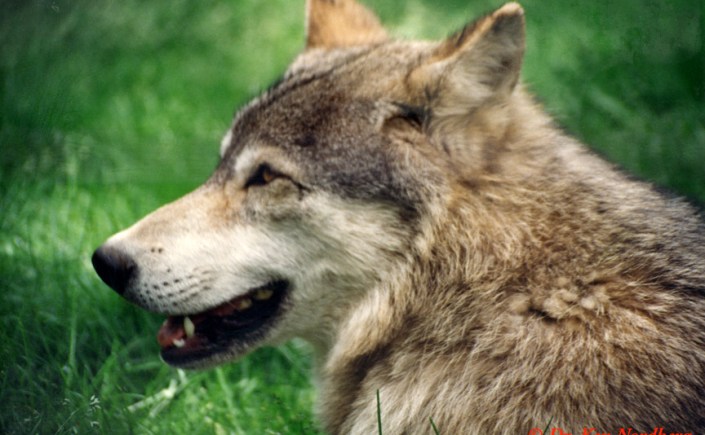
Few Americans know much about the lives of Minnesota’s gray wolves, yet all seem to have definite ideas about how they should be managed. I am not a wolf manager, but I have spent a great amount of time during my past 29 years among gray wolves inhabiting a ten square-mile area a few miles south of the Ontario Border in Minnesota’s scenic Arrowhead Region. There since 1990, I’ve been studying habits, behavior and range utilization of white-tailed deer and black bears. Based on these studies and earlier whitetail/bear studies in Aitkin County beginning in 1960, I have written about 900 articles for outdoor magazines—Midwest Outdoors during the past 30 years under the byline, “Dr. Nordberg on Deer Hunting”—and seventeen popular books including Whitetail Hunters Almanac, 1st–10th Edition. Arguably, gray wolves have been at a historic high north and south of the Minnesota/Ontario Border for more than two decades. After a year of becoming accustomed to my frequent camping, scouting and sitting in trees among them, I have often observed these awesome predators at very close range. I have thus been able to keep track (via skilled observation methods only) of their numbers and relationships with deer and moose and discover how the Endangered Species Act and protectionists all over America have been adversely affecting their lives.

One characteristic of gray wolves that is commonly overlooked by those who protect them from being hunted is, wolves live on flesh and bones of other animals. They therefore greatly influence numbers of other animals living within their ranges. Their primary prey in Minnesota’s Arrowhead Region are white-tailed deer and moose (not many moose when less dangerous deer are plentiful). There was a time when a certain biological axiom was well known and understood about predators and their prey, namely, “when predator numbers are high, prey numbers are low and vise versa.” Without sound management by humans, ups and downs of predators and their prey tend to be cyclic and extreme. When predators have become so numerous that surviving numbers of their prey animals have become too few to provide adequate food, the predators bear fewer young, if any, and inevitably begin to die in great numbers from starvation and related diseases.

Many politicians in Minnesota have recently come to the conclusion that because opportunities to see gray wolves living in our state would be a great tourist attraction, future wolf hunting (after federal delisting) should be banned. Ironically, though most Americans become enraged upon discovering overabundant cattle, horses, dogs and cats suffering from a lack of adequate food, they think nothing of subjecting gray wolves to this same terrible fate. To be fair, most Americans do not realize the protection provided wolves by the Endangered Species Act since 1974 and by those in government who insist wolves should not be hunted have allowed the gray wolves of our Arrowhead Region to become so numerous that they have been finding it more and more difficult to find adequate food. But, because gray wolves (like black bears and foxes) are rarely seen even where very numerous, most Americans do not realize this has been happening.

Some Americans do realize what has been happening in Minnesota’s Arrowhead Region as a result of gray wolves being allowed o become overabundant, namely, residents of this area and those who have hunted deer there for many years. These Minnesotans have long been disgruntled about the increasing depredation of farm livestock, wolves showing up in yards in urban areas, wolves killing and eating pet dogs and cats, wolves lurking near rural school bus stops and chronically low deer numbers. The inability of Arrowhead whitetails to recover to 1950s and early-1960s numbers despite widespread logging has long been a subject for heated discussions in this region. Before the severe winters of the mid-1960s when up to 90% of whitetails perished in Cook md Lake Counties (with somewhat lesser percentages elsewhere across northern Minnesota), there were as many as 22 deer per square mile in the Arrowhead Region, including where I study whitetails today. Deer in my study area have never numbered more than 8–11 per square mile between 1990 and 2016. Though my family and I have personally limited the number of deer we have harvested to four mature bucks per firearm hunting season, the deer population there eventually fell to a mere five per square mile in 2017. Deer harvests by hunters are not the reason. Only about one deer has been harvested by licensed hunters per ten square miles in this region for several years.

Like wolf packs elsewhere, studies suggest the wolf pack of my study area—made up of related wolves that typically come together about November eighth each year to hunt deer cooperatively until snow melts in spring—probably kills only about one adult deer per week in their vast hunting range, about 100 square miles in size. However, the mated pair that dens in my study area has killed three of four fawns between late May and early November annually. This was made evident by personal observations of fawns being killed by wolves, the fact that from 1990 through 2018 almost all wolf scats found in this area contained deer hair, unstained and unworn fawn teeth and fawn-sized dewclaws and hoofs between late May and early November and the fact that there has only been about one surviving fawn per two or more mature does in this area after November first each year, even after most mature does had given birth to twin fawns following mild to moderate winters. Significant numbers of deer of all ages have perished in this region during some severe winters since 1990, but fawn depredations by wolves is the principal reason whitetails of my study area have never been able to recover even close to numbers that were common during the 1950s and early 1960s. I am not sure whether the great number of fawns being killed simply reflects the fact that fawns are easier prey or it is a consequence of chronically low numbers of all whitetails.

During this same period, moose numbers in my study area fell from about three per square mile in 1990 to less than one per square mile in 2017. Though brain worms carried by whitetails (not fatal to deer) have been blamed for the demise of Minnesota moose, similar reductions of moose have occurred throughout North American where there are no brain worm infected deer (more likely related to global warming). I have personally witnessed wolves pursuing moose from calves to full-grown bulls in my study area and in Cook County and have found parts of recently killed moose with wolf tracks about them many times since 1990. Wolf depredation of much larger, more dangerous moose by Arrowhead wolves today is likely a consequence of chronically low deer numbers, caused by chronically overabundant wolves.

A number of other changes or consequences attributable to an overabundance of wolves have also been observed in my study area since 1990. I grew up in Aitkin County where there have always been gray wolves (then called timberwolves), made evident by their tracks, droppings, howls and rare sightings. They were not often seen back then because they hunted primarily at night and deer were plentiful. Today, the two mated wolves of my study area, which hunt singly, and the related wolves that join them to form packs in November, are often seen and/or heard excitedly howling while pursuing deer or moose during daylight hours, including midday. Last November, their tracks were freshly made during daylight hours about our tent deer camp (while we were away hunting) almost daily for two weeks, likely attracted there by scents of bucks we had taken. Previously, this only happened at night, twice accompanied by noisy howling within twenty yards of bucks hung behind our tent. In recent years, these wolves have commonly keyed on our gunshots, quickly consuming deer entrails left behind after we began dragging deer to camp. Obviously, nighttime hours no longer provide our Arrowhead wolves with enough opportunities to kill adequate numbers of vulnerable (catchable) deer. Healthy mature whitetails can run as fast or faster than gray wolves and in forest habitat they repeatedly leap over obstacles that soon discourage pursuit by wolves. Our gray wolves must therefore key on deer made slow for some reason—deer that are very young or old, wounded, sick, starving, slowed by deep snow or made to fall on slippery lake ice in winter. Ordinarily, gray wolves are only successful at killing mature whitetails in one of five attempts, and today too few of such opportunities occur at night.

In the early 1990s, the wolf pack of my study area typically consisted of a grizzled-black alpha male, a buckskin-colored alpha female, 3-4 other mature wolves with tawny legs and muzzles and two half-grown pups. Since 2005, our pack has never included more than four mature wolves and no pups—strong signs of inadequate nourishment (inadequate vulnerable deer) during previous winters. Our entire original pack did not survive the winter of 1992-93, early deep snow likely contributing to fatal starvation. They were replaced by a new alpha pair and new members of their pack the following year. This second set of wolves has inhabited my study area ever since.

In 1990, only one group of wolves was heard howling at sunset about two miles northwest of my camp. By 2010, three additional groups of wolves were regularly heard howling at sunset at more distant sites east, south and southwest of my camp—meaning wolf numbers had quadrupled in this area between 1990 and 2010.

The unprecedented spread of gray wolves from our Arrowhead Region to the Dakotas, Iowa, Wisconsin and Upper Michigan provides the most convincing evidence our Arrowhead wolves are overabundant. Mature wolves with established ranges are known to drive off or kill other wolves that dare invade their ranges. This is the reason young wolves searching for new ranges of their own and likely some wolves that have migrated south from wolf-crowded Ontario have been forced to greatly expand their geographic range, in most cases ending up where they are not welcome. This continuing expansion means there is no room for additional wolves in northeastern Minnesota.

For the sake of our Arrowhead gray wolves, therefore, something must be done to reduce and control their numbers. The best and most humane way to restore a healthy and flourishing ratio of our long overabundant gray wolves with their long dwindling natural prey in an area most suitable for wolves, our Arrowhead Region, is allow our well qualified MDNR big game managers to reduce wolf numbers there until there is an equally healthy and flourishing number of deer throughout this region—ideally about fifteen deer per forested square mile. This would be a simple means of determining when numbers of very difficult to count gray wolves are finally at an ideal, ecologically balanced ratio with their prey. After 45 years of allowing our wolves to become overabundant, wolves, deer and moose endlessly made to suffer the consequences, banning wolf hunting, the most practical and humane means of reducing wolf numbers quickly and with great control, would only make matters worse for our Arrowhead wolves, deer and moose. It’s time our widely revered, over-protected wolves and their equally revered prey are finally rewarded with sound management. I know Arrowhead residents and Zone 1 Minnesota deer hunters would enthusiastically welcome this as well.

Scouting in Spring—a Shortcut to Productive Fall Scouting


In a few days my sons and I will head north to do our annual spring scouting (started in 1980). Most of our time will be spent searching for and measuring various sizes of fresh deer tracks and droppings—absolute evidence of the existence of various sizes of deer of both sexes that currently live our hunting area. We normally scout in late April, right after after snow melts, before sprouting leaves begin to make deer signs difficult to find and before blood-crazed ticks, mosquitoes, gnats and black flies become numerous. This year, we have to wait a bit because eight or more inches of snow still covers the ground in our hunting area. Because we hunt mature bucks only, the fresh tracks and droppings that most interest us are those made by mature bucks—signs that reveal these deer are now resettled in previously established home ranges or newly settled in ranges of bucks we tagged last fall. Fresh tracks and droppings made by mature does are not ignored because, like those of mature bucks, they reveal does have resettled in their previously established home ranges (4–5 per square-mile) where they’ll be located while in heat in November. In spring we can find the deer signs we search for rather quickly because we know where to look for them: in previously identified whitetail home ranges, in bedding areas and feeding areas, at previously used watering spots, on certain deer trails and at sites of interest discovered on a recently made aerial photograph of our hunting area. Such range elements rarely change in location from year to year except where logging has occurred. After two days of spring scouting and placing long lasting cattle-type mineral blocks where they will benefit mature bucks, we will again return home knowing exactly where to concentrate our efforts next fall while engaged in our most prolonged, most difficult, most important and most productive pre-hunt scouting and field preparations.

Locating big bucks in spring generates excitements that lasts all summer. It makes my sons, grandsons and I much more thorough while preparing for the coming hunting season. That’s good, but as opening day draws near, it also causes us to daydream more and more and make it increasingly difficult to fall asleep at night. When you think of the few things in life that can make these things happen, you have to reaize taking a big buck is something pretty special, well worth some extra effort, scoutng in spring, for example.


Blasting a Long Held Belief About the Rut

About 85% of whitetail fawns are born in May, beginning about the 23rd. The gestation period (the period between the day a doe is bred until its fawn is born) is 201 days. This means about 85% of does are bred during the first two-week period of the whitetail rut beginning about November 3rd—always triggered by a specific, annually recurring ratio of darkness to sunlight. This means breeding is not in progress when about 90% of antler rubs and buck ground scrapes are being made between mid-October and the first days of November as many hunters have long believed. Deer are not “really ruttin’” until early November. During the 2–3 weeks before breeding begins, all antlered bucks are merely establishing or attempting to establish intended breeding ranges by marking them with easy-to-spot, musk-laden rubs and scrapes. By the time does begin emitting the pheromone that announces they are in heat, the most dominant of bucks will have forced lesser antlered bucks (bucks lower in their pecking orders) to flee off range and remain off-range until breeding ends in mid-November (some of which will attempt to sneak prematurely, sometimes often, especially yearling bucks).

About 10% of fawns are born in late June, meaning their mothers were bred during the second two-week period of the whitetail rut beginning about December 1st—triggered by the same specific ratio of darkness to light. The remaining 5% of fawns are born in late July, meaning, their mothers were bred during the third two-week period of the whitetail rut beginning a few days before January 1st—after which the triggering ratio of darkness to sunlight comes to an end until the following November.

All of the above dates are likely to occur a few days later in southern U.S. states. They may occur earlier in northern Florida, a month earlier in south-central Texas where whitetails are on a different biologic clock and may occur a month earlier in Virginia following a bumper crop of white oak acorns.

Bucks With Antlers in April

It’s mid-April and some whitetail bucks still have antlers. This is normal for yearling bucks, the last of bucks to shed their antlers. Ordinarily, the first to lose their antlers are the big trophy-class dominant breeding bucks, 5-1/2 to 6-1/2 years of age (few survive their 7th winter). In my northern Minnesota study area, this generally happens shortly before whitetails stage their annual migration to traditional wintering areas, about the beginning of the fourth week in December. Early shedding probably reflects their worn-out physical condition. If not most dominant, bucks 2-2/2 to 4-12 years of age drop their antlers January through March in wintering areas. Though I have occasionally found pairs of antlers close together that were obviously from the same buck, most are shed several days apart at scattered locations. I have watched bucks with single antlers (see 2-1/2 year-old buck above), apparently anxious to finish shedding, bang their remaining antler repeatedly with great effort on tree trunks. Interestingly, from almost the moment a buck sheds its antlers, it becomes docile (non-combative) and no longer has an interest in breeding. This allows mature, less dominant bucks to breed the few does in heat (5%) during the third and final two-week period of breeding begining a few days before January 1st. I have watched yearling bucks actually charge antlerless dominant breeding bucks at this time, forcing them to turn tail and flee (revenge?). Later in winter, antlerless dominant bucks do occasionally battle with other dominant bucks—pummeling one another with fore hoofs while nimbly dancing about on their hind legs. Once snow melts in spring, mice, squirrels and porcupines begin devouring much relished sheds.

How to Make a Hunting Stool

Though you may not realize it yet, the most productive method ever created for hunting mature bucks is mobile stand hunting at ground level. While using this method, the hunter takes quick advantage of very fresh tracks or other signs made by older bucks, changing stand sites every day or half day to keep near them. Frequent changes in stand sites is necessary when hunting older bucks for two reasons: 1) from mid-October until the end of the year, older bucks are seldom active in one limited vicinty much longer than a day and second, today’s mature bucks are “stand-smart,” meaning they generally find, identify and begin avoiding a stand hunter within 1–30 hours after the hunter begins using one stand site. A backpacked stool enables the hunter to quickly and quietly change stand sites and always sit well hidden by natural cover near trails and sites currently being used by older bucks today, made evident by very fresh mature-buck-sized tracks and other signs, or will be used later today and/or tomorrow morning if not alarmed there meanwhile. For all these reasons, no hunting aid can keep a hunter close to big unsuspecting bucks throughout a hunting season as well as a folding, backpacked stool.

To date, the best backpacked stool I have ever used is one I made myself in 1991. To see how I made it, as is often asked, go to my website, http://www.drnordbergondeerhunting.com, click on the “Articles” button on the left side of my home page and then scrool down to the bright-blue-lettered title, “How to Build Dr. Ken Nordberg’s Portable Hunting Stool.” Once you build one and become accustomed to using it properly, you will consider your stool to be your most valuable tool for hunting mature bucks and/or other deer.

Amazing Spring Scouting

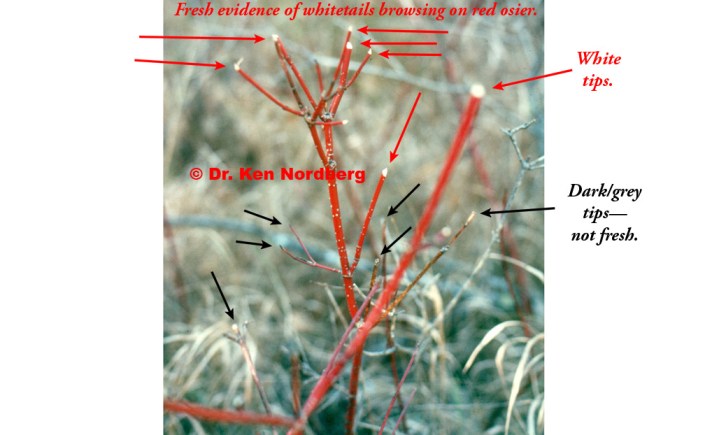
Beginning in 1991, to prepare for the days I would lead my students from all over America afield for instructions in my early May buck and bear hunting schools in the wilds of northern Minnesota, I scouted up to a week right after snow melt. It was then I discovered signs made by whitetails such as antler rubs, ground scrapes, evidences of browsing (see photo) and favorite deer trails were as fresh in appearance as when they were made or used during previous fall hunting seasons. When the ground is damp and soft in early spring, and before leaves begin growing on trees, shrubs and grasses, these deer signs plus freshly made tracks and droppings are easier to spot over greater distances than at any other time of the year. Newly made tracks and droppings then provide absolute evidence of the existence of mature bucks and other deer that will available to hunt in fall (not including yet unborn fawns) and at this time they are using the same trails, cover and range elements they will use after leaves have fallen next fall. During this one brief period in spring, before ticks and blood-thirsty insects become abundant, everything you need to know about where to stand hunt during the first days of the coming hunting season is laid out in plain sight.

Our Northern Whitetails are now Desperate for Food

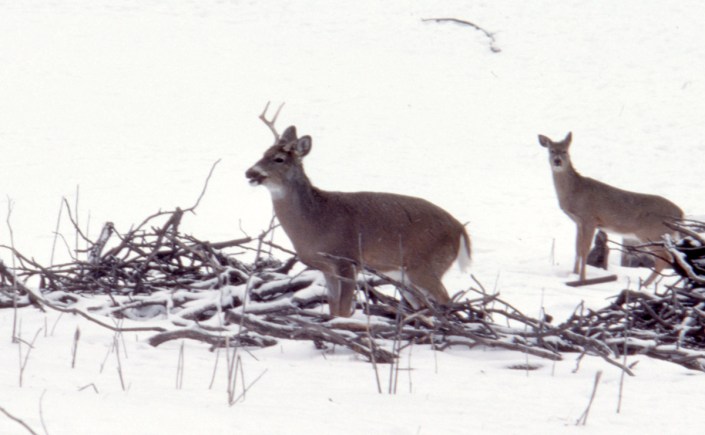
Our beleaguered northern whitetails, now trapped by deep snow in browse depleted wintering areas, need a snow melt soon. My long-time deer hunting partner who lives in north-central Wisconsin called to tell me increasing numbers of deer are showing up in his country yard to climb to the top of a seven-foot snow bank to browse on branches of his apple tree. I don’t know how high this is on the desperate whitetail scale, but this must be near the top. In the northern suburb of Minneapolis where I live, following our historic record snowfall in February whitetails living in a park six residential blocks away have recently been showing up in my yard and neighboring yards to munch on exposed tops of various flowering shrubs and evergreens (leaving tracks in snow like those in the photo above). Last night, a 15–20-pound white-faced rat, more commonly known as an opossum, spent the evening trying to figure out how to open the refuse can on my back porch, arousing considerable excitement in Harvey my wirehair pointer who was finally dispatched to end the ruckus. I have no idea what the flock of robins wintering in my yard have been eating, but they seem to be doing all right. Though whitetails in my northern Minnesota study area could move about in in snow in search of browse without great difficulty during December and January, our record snowfall since then has doubtless forced them to subsist on much, if not all, of their fat stores by now (mid-March). It now appears we are going to lose quite a few deer due to starvation this winter, mostly younger and older deer, including trophy-class bucks, if a serious snow melt doesn’t commence soon, enough to finally enable whitetails to break out of their depleted wintering areas (deer yards) to find new, unused sources of life-saving browse and/or crop residues in nearby farm fields.

Proposed Dangerous Copper Mining in Minnesota

If someone dropped a bomb that spread caustic sulfuric acid and other dangerous chemicals across a sizable portion of Minnesota’s scenic Arrowhead Region, including waterways draining into the Boundary Waters Canoe Area and Canada’s adjoining Quetico Provincial Park, and even into Lake Superior, killing trees, vegetation, birds, animals, fish and all other wild living creatures living near, downwind and downstream of the bombsite and poisoning affected soil and water for thousands of years, no punishment for committing such a heinous crime would be adequate. Yet two foriegn mining companies propose to do exactly this while promising to extract copper, nickel and gold from U.S. sulfide rock without any danger to living things, which has never been accomplished by even the most experienced of copper mining companies anywhere else in the world. Unlike iron ore, sulfide rock is an unstoppable source of sulfuric acid and other poisonous substances when dug up and exposed to air and water, rain or snow. Minnesotans anxious for more jobs are being blindsided by these compances. A trip to the Silver City Area in New Mexico and the region south of Tucson, Arizona where copper mining has been going on big time since the 1800s and talking to people who live near the huge copper mines there would prove it. For Heaven’s sake Minnesotans, please wake up. There is no shortage of copper. Don’t allow this unnecessary scourge get a foothold and inevitably destroy most of our pristine Arrowhead Region.

Why Trophy Bucks are Phantoms

All serious whitetail hunters would like to take a trophy-class buck (having antlers measuring about 150 inches or better). The trouble is, few are ever seen by hunters during deer hunting seasons because they are the most skilled of whitetails at discovering, identifying and keeping out of sight or maintaining safe distances from deer hunters. Adding to the difficulty of hunting them are customary activities of such bucks each fall. Except for a week or so in late November, from mid-October until the final week of December, they rarely remain in one limited area much longer than a day. Throughout the latter half of October and the first days of November, such bucks (likely dominant breeding bucks) cruise their 1–2 square-mile home/breeding ranges daily, 1) making ground scrapes and antler rubs or renewing their appearances and intensities of musk odors every 24–48 hours (signposts meant to warn other bucks to keep away), 2) searching for other antlered bucks (previously conquered in battle) to evict and 3) visiting all mature and yearling does living within their breeding ranges, expecting to soon find one in heat. Once the first-two week breeding period begins in early November, such bucks are either accompanying does in heat (each doe being in heat for only 24-26 hours and only about 10% are in heat during any one day) or searching for does in heat. A second two-week period of breeding begins about December first and a third begins a few days before January begins. All this makes it difficult in fall to predict where a trophy-class buck that hasn’t abandoned its range because of hunting might be located from day to day.

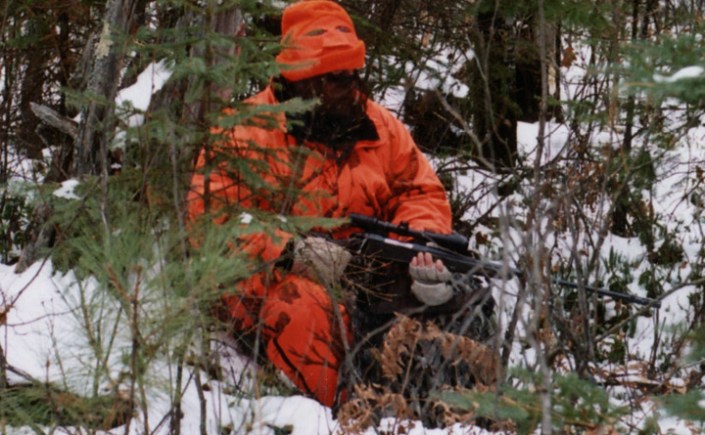
Being the easiest of deer hunters to dentify and avoid, those who hunt on foot have the poorest odds for taking trophy-class bucks. Though stand hunters have better odds, because trophy bucks are a class of deer that typically discover and begin avoiding stand hunters wthin 1–30 hours after hunters begin using stands and because few stand hunters change stand sites throughout a hunting season, most stand hunters spend few hours, if any, close enough to trophy-class bucks to see them. To regularly take such bucks a different kind of stand hunting is needed: one during which the hunter changes stand sites daily or twice daily and is always located within easy shooting distance downwind or crosswind of very fresh 3-3/4 to 4 inch long hoofprints, shiny ¾ to 1 inch long droppings (likely clumped), a freshly made or renewed ground scrape or a feeding area currently favored by a trophy buck, made evident by fresh, above-sized hoofprints and droppings. Wherever such deer signs are found, the bucks that made them are usually not far away—right now or will be later in the day or the next morning (see photo above of Doc with a buck he dropped when it returned to renew its scrape 25 yards away early one November morning).

To learn much much more about how to hunt phantom bucks, go to my website, drnordbergondeerhunting.com and then click on YOUTUBE. If you haven’t seen my YouTube presentations, you are in for a big suprise.