Your Next Favorite Deer Hunting Method: Opportunistic Stand Hunting 

 Let’s imagine you and I have decided to do some bass fishing. How are we going to do it? Should we put minnows on our hooks, cast them next to a weed bed and sit in our boat at the same spot all day long watching our bobbers? Let’s imagine we caught one. Should we then return to the same weed bed and fish the same way, anchored at that same spot, every day for a week or two and do the same year after year? Of course not. Every experienced bass angler knows a much better way to catch bass. Yet, this is exactly how a majority of American deer hunters have been hunting whitetails since the 1980s. What’s wrong with it? After millions of us have been doing this all these years, annually culling deer vulnerable to such hunting, almost all North American whitetails today that have survived two or more hunting seasons know exactly how to identify and avoid tree stand hunters. Sure, tree stand hunters still take deer (whether using bait or not), but most deer taken by them are inexperienced fawns and yearlings.

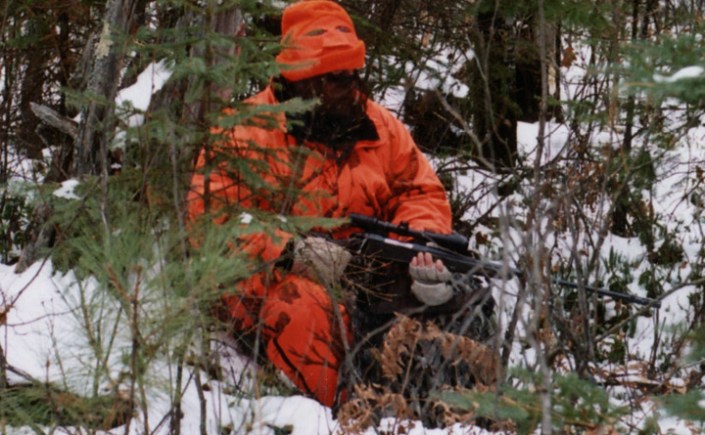
Opportunistic stand hunting, evolved from my 55 years of hunting-related research with wild deer, is a new, fair chase (no bait) hunting method akin to fishing for bass the most productive way, moving often. Not as often as bass fishermen, but changing stand sites every day or half day. Moves are not aimless. The word “opportunistic” refers to taking quick advantage of very fresh deer signs that reveal trails or sites being used by one or more specific, unalarmed whitetails right now. If things are done right, that or those deer will very likely use the same trail or visit the same site (a feeding area, for example) again later today or tomorrow morning. The fresh signs keyed on are discovered daily while hiking along a limited number of specific trails (minimizing the spread of lasting ruinous human trail scents) via a method of mid-hunt scouting that does not alarm whitetails (inspired by gray wolves). This puts the hunter close to a desirable quarry once or twice every day or half-day. Stand sites (elevated and/or ground level) used the first few days of a hunting season are selected and prepared 2-3 weeks before the opener. During the rest of the hunting season, additional stand sites are used right away or later the day they are selected or the following morning. Unless the fresh deer signs happen to be close to a stand site selected and prepared before the hunting season began, most are simple but well hidden ground-level stand sites (for use with a backpacked stool) that have certain mature-buck-effective characteristics and require very litle or no preparation. They are always located within sight of those fresh deer signs and are always downwind or crosswind.

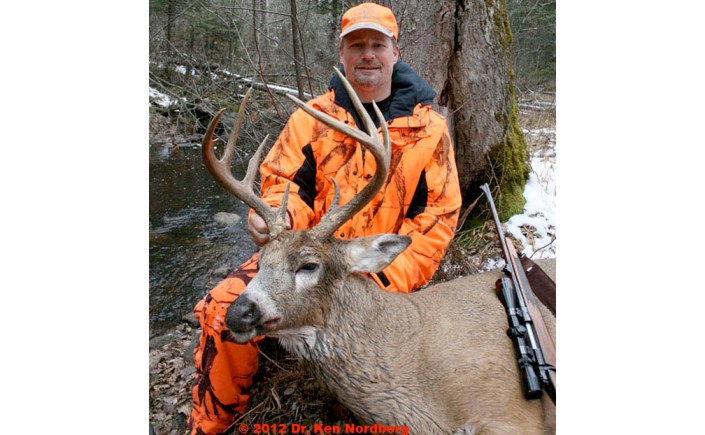
Though not as simple a hunting method as still-hunting or making drives, opportunistic stand hunting is by far the most productive for taking mature bucks today (deer most other hunters rarely see). It enabled my three sons and me to take most of the 98 mature bucks we tagged between 1990 and 2017. Most were taken at stand sites never used before during the first two legal shooting hours of the day. Learn all about how to use this new and unusually productive way to hunt mature bucks and other deer in my newly published Whitetail Hunters Almanac, 10th Edition.

Yes, Much of What I Write About Whitetails is Different

Hunters who have never heard of me are sometimes taken aback by the strange and unheard of things I have to say about white-tailed deer and black bears and how best to hunt them. That’s understandable. Few, if anyone, has done the hunting-related research I’ve been doing during the past 55 years. Many terms I use to descibe behavioral characteristics of whitetails are not commonly found in most books or outdoor magazines. When I first began studying habits, behavior and range utilization of wild whitetails and black bears in the 1960s and 70s, I was taken aback too. The first whitetails I studied were doing crazy things I didn’t expect – dominant breeding bucks abandoning scrapes when breeding began, for example, and breeding on New Years Day, year after year, for another. This prompted me to begin studying whitetails in many other states and in different types of habitat to determine whether or not the first deer I studied were uniquely different as suggested by an editor of Field & Stream Magazine. What I was learning turned out to be characteristic of whitetails everywhere, however. Though I’m sure early Native Americans, mountain men and hunters the likes of Daniel Boone and Davy Crockett knew these things, it didn’t end up in books to benefit us deer and bear hunters today.  What I was learning as a modernday hunter and researcher was therefore different but so fascinating that field research and writing about my results eventually became my full time work. Though now 83 years of age, after 73 years of hunting whitetails, mature bucks only since 1970, and more than a half century of field research, I still have no plans to quit.

Actually, I began preparing to do this unique kind of research in 1953, earning three college degrees at the University of Minnesota during following eight years: a Bachelor of Arts degree  with a major in Experimental Animal Psychology, a Bachelor of Science with a major in Natural Sciences and a Doctor of Dental Surgery. While there, I worked in the Department of Physiology as a Senior Laboratory Technician taking part in kidney research. After returning home after serving aboard a ship in the U.S. Navy during the Viet Nam War, I became a part time Clinical Instructor in Pediatric Dentistry, also overseeing research dealing with rampant caries in children. All this prepared me well to begin my formal independent hunting-related research with wild Minnesota deer and black bears in 1970. Some preliminary studies began in the early 1960s. My initial studies made me an early pioneer and advocate of previously unknown tree stand hunting and first to accurately describe the whitetail rut.

Always anxious to share what I was learning with other hunters, I began submitting articles to many outdoor magazines in 1980. Since then I have written nearly 900 articles about whitetails and whitetail hunting. During the past three decades I have been a feature writer (Dr. Nordberg on Deer Hunting) for Midwest Outdoors Magazine. For many years, I was also a feature Writer for Bear Hunting Magazine and a bowhunting magazine. In 1988 I began writing my popular 10-book series entitled, Whitetail Hunters Almanac (the title now copied by others). Shortly, I will publish my 5th Edition of Do-It-Yourself Black Bear Baiting & Hunting, an upgraded guide to hunting trophy class bruins. This book has long been considered the “Black Bear Hunter’s Bible,” guaranteeing hunting success. It changed the way black bears are hunted all over North America. I have also created several popular videos including a 12-hour series entitled Whitetail Hunters World (no longer available) and videos with my son John’s help from my Buck and Bear Hunting Schools in the wilds of northern Minnesota – attended by hundreds of hunters from all over America for 15 years. I have presented countless deer hunting seminars at sports shows and sportsmen clubs in the eastern half of the U.S.. Today, I also provide hunting instructions on the internet, including website articles, blogs, Twitter and YouTube preentations.

My newly published 10th Edition of Whitetail Hunters Almanac, a 518-page, 8” x 10” encyclopedia of modern whitetail hunting with 400 illustrations introduces six new, mature-buck-effective, fair chase, hunting methods. Though designed specifically to provide easy shots at unsuspecting (standing or slowly moving) older bucks short distances away, they also provide frequent opportunities to observe or take other deer. These hunting methods, including my favorite, opportunistic stand hunting, enabled my three sons and me to take 98 mature bucks between 1990 and 2017, many now on our den walls. When properly used, these new hunting methods are far superior to all other hunting methods for taking the most elusive and wasted of whitetails, bucks 3-1/2 to 6-1/2 years of age. I am anxious to teach as many deer hunters like you as I can to use these impressive new hunting methods.

American whitetail hunters have been misled by many myths and misguided claims that have actually been limiting deer hunting success for 100 years or more. In my new book I disprove commonly believed myths and misguided claims. Everything I teach about whitetails is based only on what 80-90% of each of the five behavioral classes of wild whitetails do under similar circumstances over periods of ten or more years. Limiting my conclusions to this methodology is the only way I know to establish truths about whitetails (and bears and wolves) and develop superior hunting methods. Sure, whitetails are taken lots of different ways, but something that works once or even twice, or a stand site that enables you to take a big buck isn’t likely to make you a regularly successful buck hunter. A tactic like making drives that enables you to take lots of young deer isn’t going to make you regularly successful at taking mature bucks either. Making you a regularly successful whitetail hunter, or better, regularly successful at taking mature bucks only is my goal. Properly done, what I teach works. Rather than doubt it, give it try, sure to be an exciting and rewarding way to prove it.

So, my hunting friends, you now know me, what I’ve been doing for you during the past 55 years and why what I teach is often quite different.

Can Our Whitetails be Saved From CWD?

Maybe you don’t realize how serious this new threat to our white-tailed deer really is. It began in the late 1960s when a strange new disease was discovered killing captive mule deer in Colorado. It was given the name Chronic Wasting Disease (CWD) because affected deer eventually lost considerable weight, making their ribs show. Initially, this fatal disease was spread by shipping infected captive deer yet without symptoms (it can take years for symptoms to appear) from privately owned deer farms to different states and countries. Inadequate means of keeping infected captive deer from coming in contact with wild deer then opened the door to passing CWD to free-ranging white-tailed deer, mule deer, black-tailed deer, elk, moose, caribou and reindeer in 24 U.S. states, three Canadian provinces and two foreign countries, including of all places, South Korea. Though stringent new federal and state regulations and diagnostic testing now make it unlikely animals with undiagnosed CWD can be shipped anywhere, this fatal disease has thus far defied all attempts to eliminate or halt its spread among our unfenced wild whitetails.

No American citizens have thus far contracted this disease after handling or eating venison from deer infected with CWD and many researchers believe humans and our livestock are safe from it, but a theoretical risk of humans contracting this disease nonetheless exists. The misshapen prions that cause this diseases can mutate and have. CWD belongs to a group of diseases known as transmissible spongiform encephalopathies (TSEs) that include scrapie (fatal to sheep), mad cow disease (fatal to bovines) and relatively rare Creutzfeldt-Jakob disease (unrelated to a disease of animals but fatal to a small number of Americans annually). Scrapie has never affected humans, being unable to jump the usual barrier between different species of mammals. From mad cow disease, however, came a new variant of “Creutzfeldt-Jakob disease” which did jump the species barrier from cattle to humans, killing 177 people that ate beef from infected cattle in the United Kingdom between 1986 and 2012. This might not be the end of it. New studies in the UK reveal persons with certain genetics may develop symptoms of this variant of CJD many years after being infected.

Most researchers and organization involved with seeking to stem CWD in North American recommend taking certain precautions when hunting and taking deer in areas where CWD in deer is known to exist. The following precautions include a few additions of my own:

 •  Do not harvest a deer that appears sick, emaciated (ribs showing) or acting abnormally.

•  Whether a deer you harvested had any symptoms of CWD or not, wear latex/rubber gloves (arm-length) when field dressing it.

• Have your deer carcass tested for CWD as directed by your state Department of Natural Resources, thus providing information vital to halting the future spread of CWD.

•  When butchering, bone the meat (cut meat away from bone), sawing through no bones, especially the skull or spine (do not split the backbone).

  Avoid handling brain, spinal cord or lymph glands.

•  Thoroughly clean your hands and sanitize your tools after field dressing or butchering by boiling them in water for 20 minutes.

•  Instruct your meat processor (if you take your deer to one) to bone your meat and package it separately from other deer.

•  Consume none of the meat until you have received results of your test for CWD. If positive, destroy your venison as directed by your state DNR.

 Personally, I believe our whitetails will be saved, but it may be a lengthy and heartbreaking ordeal for deer, state deer managers and deer hunters. Almost everything imaginable has already been tried to arrest the spread of CWD among wild deer in America, but unfortunately without significant success. Hopefully, some new research will soon find a new way to stop this disease. Success may have to come from whitetails themselves, deer vulnerable to CWD dying and deer not vulnerable to CWD surviving to recreate a whole new population of whitetails resistant to CWD. As mature whitetails have been proving to human hunters for thousands of years, they are amazingly adaptable and persevering animals. I can’t believe some misshapen prions that cause CWD can actually wipe them out.

Meanwhile, unaffected whitetails need to be hunted. Without hunting, healthy whitetails can double in numbers in one year. Nowhere in America can remaining habitat suitable for whitetails support twice as many deer. If allowed to become overabundant, they will suffer from malnutrition and starvation due to a lack of adequate food, especially in winter, making them vulnerable to disease. Our obligations as American deer hunters do not end with the purchase of a hunting license or the threat of CWD. During the coming days and years, we must give those who work to stop CWD our greatest support. They are going to need it.

Hunt or Bait Whitetails, Your Decision

Because of various reasons not entirely the fault of American deer hunters, they have been unable to reduce whitetail numbers sufficiently during hunting seasons in various regions to ensure surviving deer will not be overabundant and likely to suffer from malnutrition and starvation during winter months. In an effort to improve numbers of deer taken, the use of bait (including food plots used as baits) to create whitetail shooting galleries in the woods became legal in various states. Today, millions of Americans know no other way to take whitetails, many going to extraordinary lengths to be successful at it. It didn’t take long, however, for mature bucks (and mature does) to begin to recognize the danger of visiting sites where baits are offered, especially during daylight hours. Today, the most common lament of deer baiters is, “Something needs to be done to increase the number of older bucks (or deer) in my hunting area.” Surveys I have done in such areas since 1986 invariably proved about half of the forty-plus percent of whitetails that are bucks living in an area where baiting had been legal two or more years were 2-1/2 to 6-1/2 years of age. This is the usual distribution of mature bucks wherever whitetails are hunted. The 4-1/2 to 6-1/2 year-olds are bucks in their prime. If such deer can be so elusive during hunting seasons that hunters using any of today’s popular hunting methods seldom see them, it is far-fetched to expect bait can somehow make it possible to see more of them. The only way to begin to regularly see and take mature bucks (or mature does) is learn to “more skillfully hunt” them. Those who insist on using bait – a  tactic that cannot be made more productive once mature whitetails in the area become “bait-smart” –  should be satisfied with what they get, mostly fawns and yearlings.

A detailed chart of U.S. states in which baiting is legal or not legal and regulations regarding baiting, painstakingly created by Glen Artis of Outdoorever, is available at http://outdoorever.com/deer-baiting-laws.

Keep in mind, regulations concerning the use of baits for taking deer, which baits are currently legal or not legal and where they can be used can change from year to year, so be sure to check the latest regulations in your state before using bait.

Why Beginners Not Uncommonly Take Unusually Large Bucks

Having made it possible for first-timers – children, grandchildren and invited friends – to take trophy bucks their first time in deer camp myself, I can offer a couple reasons why it happens.

First, the first-timer’s experienced benefactor – father, grandfather, uncle, friend – was anxious to ensure their hunting success and therefore did a great job of selecting a stand site for them, one with plenty of fresh signs made a trophy buck nearby.

Second, the experienced benefactor later led the first-timer to the stand site – their approach made obvious to the nearby trophy buck by their audible human footsteps and other sounds. After getting the first-timer settled at the site, the benefactor then walked away – making audible human footsteps and other sounds that convince the nearby trophy buck the human hunter(s) have left the area, making it safe to resume normal activities there. Soon thereafter, the first-timer somehow manages to control his or her emotions enough to accurately fire at the approaching trophy buck.

Having met many youngsters at Sport Shows (where I was presenting hunting seminars) over the years who were anxious to show me photos of trophy bucks they took during their previous first hunting seasons, I have often been amused by assumptions they made after taking such a buck. “I don’t need to learn more about how to hunt big bucks because as this picture proves I already know everything about how to do it,” was one. “I’ve got a perfect spot to take a big buck every year,” was another.

So much to learn.

Mature Whitetails Never Stop Changing Ways to Avoid Hunters


[From Dr. Nordberg’s new Whitetail Hunters Almanac, 10th Edition]

Knowing mature bucks inhabit your hunting area will not automatically make you regularly successful at taking mature bucks. I have hunted whitetails for 73 years (as of 2017), mature bucks only for 46. I’ve done more hunting-related research with wild deer than anyone, beginning 1960s and developed and refined more new and better ways to hunt whitetails, especially mature bucks, than anyone, but still don’t know everything about whitetails and whitetail hunting and probably never will. As my ongoing studies have never ceased to prove, the reason you and I can’t know everything about them is because whitetails keep changing. Our mature whitetails today are not the same deer Americans hunted only 30–50 years ago. Today, bucks and does 2-1/2 years of age or older are smarter. They’re more elusive. They have excellent memories. They’re less vulnerable to hunters using old, traditional hunting methods, now including tree stand hunting. They are not even close to being as vulnerable as they were to doe-in-heat type buck lures, grunt calls, rattling antlers as they were in the 1980s. If you are still using any hunting method or hunting aid that was popular 25–50 years ago, you should expect to see few older bucks today.

Phase One of a Buck Hunt Begins at 5AM

[From Dr. Nordberg’s Whitetail Hunters Almanac, 10th Edition]

It’s 5 AM. We got up at 4 AM and we’re now about to head out in the dark for a morning of buck hunting, following fluorescent tacks glowing brightly in the beams of our flashlights that were placed on tree trunks weeks earlier to guide us to our distant stand sites. It’s day-one of the of the first 2–3 day period I call “phase one” of a hunt — the short period during which most whitetails do not yet realize they are again being hunted by humans. Our stand sites for this phase were selected during 3–4 days of scouting 2–3 weeks earlier, our goal then being to find one promising stand site for each hunter for each day or half-day of hunting during our first 2–3 days of hunting. Locations of these particular stand sites are almost always written in stone, meaning, during this period we only plan to hunt at these particular stand sites (unless on the way we discover something more promising).

Where Hunter Densities are High, Hunt Where Few Others Care to Hunt

[From Dr. Nordberg’s Whitetail Hunters Almanac, 10th Edition]

Where hunter densities are high, hunt where few others care to hunt: on islands or land that can only be reached via watercraft, hip boots or waders, high top waterproof boots or a tough climb, for example. Hunt on or adjacent to small highlands in wooded swamps or bogs. My best buck and best bear in 74 years of hunting came from such sites. Other spots likely to be avoided by other hunters include middle portions of steep, well-wooded hillsides, especially rugged terrain, large expanses of dense brush or other types of dense cover including cornfields. In cornfields, sit in the last twenty rows of corn next to timber furthest from buildings, dogs and public roads.

When to turn off your flashlight in Early Morning

[Tips from Dr. Nordberg’s Whitetail Hunters Almanac, 10th Edition]

If it is too dark see where I am going when near my intended destination without the use a flashlight and likely too near to use a flashlight because its beam may alert or alarm nearby deer, I immediately turn off my light and sit down on my stool to wait until it is light enough to silently find my way without a flashlight. I call this common precaution “stopping short.” Though I may thus miss the first half hour or more of the most productive first hour of legal hunting time, my odds of seeing a buck during the remaining morning hours will at least remain undiminished.

Trails Made by Mature Bucks – Part V


My sons and I eventually discovered keeping from being identified by smell by bucks 3-1/2 to 6-1/2 years of age (and other deer) and avoiding the likely consequences is a lot more complicated than we originally envisioned. Today, I believe a whitetail’s nose is its most important organ for survival, its eyes and ears merely providing second opinions. Via a mature (experienced) whitetail’s sense of smell, it can accurately determine how far away an unseen wolf or hunter is, generally ignoring them while 200 yards or more away. Via airborne scents it can determine whether a wolf or human is moving left or right, toward it, away from it or not moving at all (Viola, that long unmoving human I smell is a “stand hunter”). From downwind, a whitetail’s nose can determine whether or not it is safe to enter a  feeding area or bedding area. When pursued by a wolf or hunter, a whitetail can use its nose to avoid ambushers ahead. When trailed by a slow-moving pursuer such as a human hunter, by turning downwind it can use its nose to keep track of the pursuer’s progress and maintain a safe distance ahead of it. When caught between standers and drivers during a drive, a mature buck can use its nose to find a safe hideaway between oncoming drivers. The only problem with depending on their sense of smell to survive is, whitetails can only detect odors of wolves or hunters drifting toward them from upwind. They cannot detect danger moving toward them or waiting in ambush from crosswind or downwind. They must then depend on their vision and hearing, senses a knowledgeable and skillful hunter can fool and take advantage of.

Whitetails make daily use of another source of identifying scents, namely trail scents. Trails scents are an intense (by whitetail standards) combination of many odoriferous molecules that fall to the ground from a hunter’s body, clothing, boot soles (especially the strong smell of rubber) and hunting gear, creating a narrow and lasting carpet of identifying odors wherever a hunter travels on foot. Unlike airborne scents which can be fleeting and only smelled from downwind, identifying trail scents remain where they are deposited last four or more days – much longer on a trail repeatedly used by a hunter or at a site where hunter has spent considerable time, preparing a stand site and/or stand hunting there, for example. Whitetails,can not only readily identify different humans via their trails scents, but approximatelty when they deposited their trail scents (from a few minutes to several days ago) and determine which direction the human traveled. The degree to which trail scents can be smelled by animals such as deer was often made eveident by my hunting dog, Rip. Trained to remain in my truck until he heard me fire my shotgun at blackducks jumped along a stream I often hunted, he would would then leap through a window lefy open for hime and follow my path of trail scents without missing a turn at a dead run.

Imagine, then, the affect a single hunter who aimlessly wanders about on foot in search of deer can have on his hunting area. In a day or two, such a hunter can create a dense tapestry of trail scents fearsome to whitetails a square-mile or more in size that lasts four or more days, making it impossible for all deer in the area to find a safe route to travel or a safe site to feed or bed, forcing them to abandon their ranges and/or become nocturnal until the hunting season has ended.

Limiting the spread of human trail scent like my hunting partners and I do it, greatly limiting the trails we use during hunting season  (see DR. Nordberg’s newly published Whitetail Hunters Almanac, 10th Edition) during hunting seasons can do wonders for your hunting success. It not only keeps whitetails from abandoning their home ranges but enables them to maintain normal, predictable, exploitable habits.

Today, mature whitetails practically everywhere recognize when a human hunter is stand hunting – remaining in one place for an extended period of time. Though they also realize stand hunters are potentially dangerous (not universally true of fawns and yearlings), they generally react to discoveries of stand hunters much differently than discoveries of humans hunting on foot. If not shot at, following the discovery of a stand hunter they merely keep a safe distance away from where the stand hunter was discovered for days, weeks and sometimes even a lifetime, while maintaining normal habits elsewhere within their ranges. Mature whitetails are apparently convinced stand hunters that spend long periods in one spot, perhaps resting, are harmless elsewhere in their ranges. Unlike hunters that hunt on foot, stand hunters are not pursuers, trackers, stalkers or likely to suddenly appear short distances away at any moment of the day,  Experienced whitetails are therefore inclined share their ranges and trails with stand hunters, like they share their ranges and trails with wolves that do no appear to be hunting. Being accustomed to finding mostly predictable, mostly harmless, though sometimes dangerous stand hunters within their ranges during limited periods each year, like prey animals the world over that have learned to live normal lives among lions, tigers, bears and wolves, our whitetails have learned to live normal lives among us stand hunters (something you are ulikely to realize if you spend an entire hunting season at one stand site).